Over a series of five previous installments, I’ve been laying out my framework for “How to Think About the Future.”
Before we dive into this sixth part, I want to provide a quick recap of where we’ve been. In the first part, we talked about how to hold the future as a landscape of possibilities with coupled systems, phase shifts, and the like. In part two, we built four grids regarding economic growth or contraction, power and wealth distribution, geopolitical interconnection and stability, and integrity of Earth systems. In part three, we explored the shape of the landscape itself: the valleys and ridges we navigate, and how switchbacks and erosion make futures more or less possible. In the fourth essay, I showcased four potential composite worlds – the Long Repair, Mordor Persists, Fortress World, and the Unraveling – making the case that the futures most worth building will likely look like failure to a culture calibrated to growth. Finally, in the fifth part, I mapped these composite worlds onto a single human life, exploring how the same patterns that shape economies, power, geopolitics, and Earth systems turn inward.
Throughout all of this, I can imagine a question may be building: “Okay, Nate. Given all that…what do I actually do?”
Well, I’m not going to tell you that today, or – to be blunt – probably ever. What I will talk about is how to think about what to do and how to engage in the logic of planning under uncertainty. I’m not going to highlight a list of specific actions or causes to support, although they remain important. I’ve spoken about them elsewhere and will continue developing that work.
From my vantage, there’s a piece missing, which is what this series attempts to provide. That piece is a methodology for you to find your own plan of action based on what you care about, your local context, and what you want for the future. Without that, sometimes even well-intentioned actions can make things worse.
That’s where I’d like to start.
The Civilizational False Positive
Before we talk about how to prioritize what to do, I’d like to talk about how I think about what not to do. We can fail in two different directions, and the causes of those failures look completely different from each other.
Type 1 and Type 2 errors are concepts from statistics that mathematically describes what we might call “false positives” and “false negatives.” I want you to imagine you’re woken up by a noise in the middle of the night, and you automatically assume it’s a burglar. Maybe you call the police or sit frozen in anxiety … but it turns out that the “burglar” was just your cat knocking stuff over in the kitchen. This is a Type 1 error: a false positive. You overreacted to a threat that wasn’t real, creating an entirely different problem.
Now imagine the flipside. You hear a noise in the night and assume it’s the cat (especially plausible if your cat, like my cat Toofie, is always running around in the night). Maybe you roll over and go back to sleep. Only this time, there actually was a burglar! You missed it because you overlooked the warning signs, exposing yourself to a dangerous situation. This is a Type 2 error: a false negative. You missed a real threat because you didn’t act.
Both types of errors are dangerous. Both happen all the time. The challenge of planning for a hazy and uncertain future involves both.
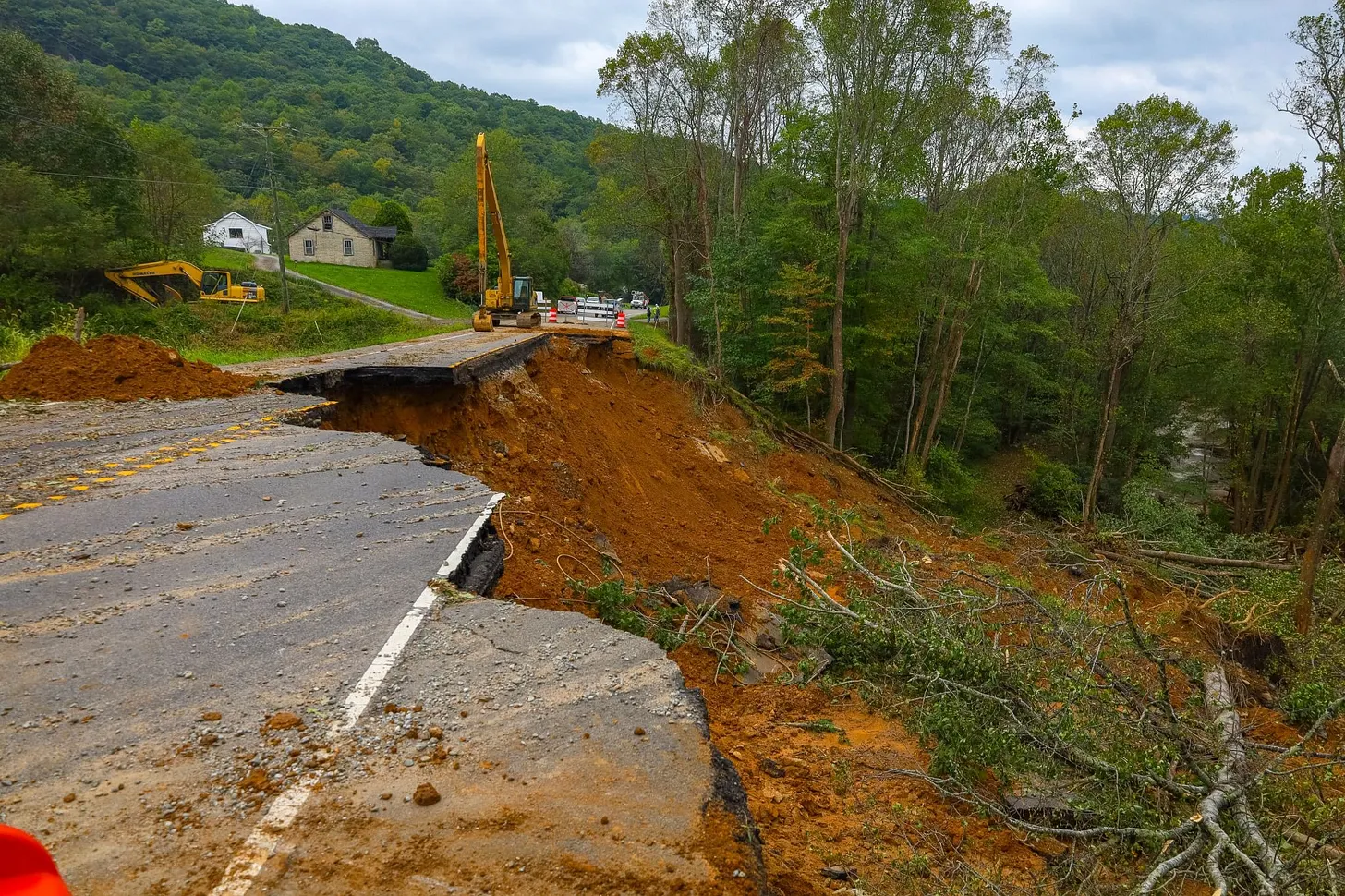
Photo provided by the author. Click on the image to enlarge.
Type 2 errors happen due to omission: the things we miss and the shortfalls we create by failing to act. Not protecting topsoil and biodiversity because GDP doesn’t measure it. Not building community resilience because there’s no institutional incentive to do so. Not transitioning energy systems because the current ones still technically work. These are the things we should do and haven’t, at least not yet. By the time the shortfalls become visible, it’s often too late to reverse them. Using the landscape language from part three of this series, we might refer to these as the “washouts” that happen due to individual and cultural “erosion.” These are the switchbacks we allow to disappear through neglect and inattention.
Type 1 errors, on the other hand, are the shortfalls we create by doing the wrong thing and acting on a model of the world that’s incorrect or incomplete. These false positives, with respect to the metacrisis, are numerous and come in a few flavors. The obvious one is taking action while using only a partial map of the system, like shutting down fossil fuels overnight when 80% of the world and 99% of the supply chains still run on them. The diagnosis may be partially right … but the prescription ends up killing the patient.
There’s also the Type 1 error of fighting the wrong battle entirely. Maybe that looks like pouring resources into things like carbon offsets that don’t offset anything, or ESG scores that don’t change the behavior of the economic Superorganism. This might look like taking action, but it’s action aimed at the wrong target. Said differently, the burglar is real but we called the fire department instead of the police.
There’s another really big Type 1 error that I always talk about on this channel. It’s the fact that nearly every institution on Earth – every government budget, pension fund, infrastructure plan, corporate strategy, and international agreement – is built on the assumption that the global economy will be larger in the future than it is today. We don’t treat growth as one possible scenario among several; we assume growth as the ground we’re standing on in order to work on all our other interventions.
What that means is that when contraction arrives (and I think the evidence strongly suggests it will) almost everything we’re currently promoting, investing in, and planning for suddenly becomes a ginormous Type 1 error. Many individual projects can be smart, well-designed, and well-intentioned, but if they assume growth in a period of decline, they would make things actively worse. Infrastructure designed for expansion becomes a maintenance burden during contraction, financial instruments designed to compound become Wile E. Coyote traps, and institutions designed to distribute growing surpluses have no idea how to distribute shrinking ones.
What Can Be Recovered…And What Can’t?
So how do we thread that needle? I think it starts with a distinction that will sound pretty simple but changes everything once we really internalize it.
Some losses can be rebuilt. Some cannot.
If you had to choose between losing fifty thousand dollars and losing your left arm, which would you consider to be the bigger loss? You probably don’t even have to think about it. You can make the money back, but you can’t regrow an arm.
Even if this is obvious at the personal level, when we move to the civilizational level our planning frameworks lose this distinction entirely. We treat losses as if they’re interchangeable: a dollar of lost GDP gets the same weight as an inch of lost topsoil, but they’re fundamentally different. One can be rebuilt fairly quickly, and the other takes centuries to regenerate.
Reversible losses – like money, market positions, consumer goods, jobs, and careers – all matter in our world. But they all sit in one category, while irreversible losses sit in an entirely different one. I suspect the list of irreversible losses is longer than most people realize. They also exist as a spectrum from the things that are gone forever once depleted to the things that are practically irreversible, which come back so slowly they might as well be gone.
We’ve talked about the examples on this channel before. Topsoil: it takes centuries to build back a single inch under natural conditions, and we’ve been depleting it across major growing regions for decades… far faster than it forms. Water aquifers: the Ogallala Aquifer under the United States’ High Plains region still holds fossil water from the last Ice Age, which accumulated over ten thousand years. We’re draining it in decades. Once depleted, it doesn’t refill on any human timescale.
Like diamonds, species extinctions are forever. Pollinator populations have spent millions of years co-evolving with plants, and their decline cascades through the entire food system. Social trust is lost in societies much faster than it can be rebuilt, and below a certain level of trust, cooperation becomes impossible for quite a long time.
Wisdom and institutional knowledge held by experienced practitioners often goes undocumented and unrecognized. But once an institution loses its experienced people without proper knowledge transfer, that wisdom is gone. The nuclear taboo represents roughly eighty years of non-use. If it’s broken once, proliferation incentives will mushroom overnight … pun fully intended.
There are also irreversible losses in more subtle areas, like the developmental windows of children. You cannot give a child back the years of their early development. Those windows close, and any disruption that happened within them can have long-lasting impacts that are difficult to overcome.
Take a look at that list of irreversible losses and ask yourself where most of our institutional energy is going right now. Certainly not toward backtracking so we don’t lose some of these things. Our society is optimizing for quarterly earnings and GDP, while allowing topsoil, aquifers, trust, democratic norms, and ecological corridors to erode underneath us.
The radical inversion I am suggesting is obviously much easier said than done. It means spending disproportionate effort protecting the irreversible, while accepting more risk on the reversible. It means being willing to lose money to protect topsoil, to lose efficiency in order to protect ecological corridors, and to lose some comfort to preserve the developmental health of our children.
On a personal level, this distinction changed how I weigh decisions in my own life. The question I try to ask now (never perfectly or consistently) is, “Which of my actions protect something in my life or local surroundings that can’t be rebuilt?” Because those are the actions that matter most, even when they score worst on the metrics our current culture approves of.
Unicorn Strategies: Robust Actions For Any Future
So if the priority is to protect the irreversible, the next question we might ask is which actions would help, regardless of which of the composite futures we end up in. This is where I think the scenario planning logic I’ve been laying out becomes most helpful. We don’t need to know which composite world is coming to know what to do, because some actions act as switchbacks in almost every landscape.
Building soil health is valuable in every world because regenerative agriculture is foundational: food security determines survival and holds communities together. Strengthening community relationships will be favorable in every composite, because the people physically near you will matter more as conditions get harder. I would claim that, in every plausible future, your relationship with the people within walking distance of your home will become more important than it is today. That’s a personal and cultural switchback you can start building this week, because community ties that exist before a crisis are exponentially more valuable than ones you try to build during one.
Practical skills are helpful in any future scenario: food production, repairs, basic medical knowledge, water management, building, and teaching. These have value in every world, including our current one, and become even more valuable as larger systems become less reliable.
Reducing dependence on fragile supply chains is necessary, since local food, local energy, and local water act as buffers in the best composites, and survival in the worst. Protecting local ecosystems, watershed health, pollinator populations, and soil biology is in the same category. These are foundations for everything else, and their value doesn’t depend on which composite arrives.
The reason this principle works is that it lets you act decisively without any need for certainty about the specifics of the future. Speculation bets everything on one outcome, and you lose everything if you turn out to be wrong. Robust action, in contrast, produces meaning and value regardless of which future shows up. This is how ecologists think about resilience under changing conditions. Organisms that are robust across a range of environments persist through change, even if they’re less optimized for any single one. In a period of genuine uncertainty, robustness will beat optimization.
Of course, there are limits to this. Being robust across multiple composite worlds is a good general principle, but it’s not the only legitimate strategy ahead of The Great Simplification.
We could call these “unicorn strategies.” They’re deliberately focused rather than hedged across worlds. They make sense because human beings are not interchangeable planning units. We are beings with particular loves, passions, drives, and callings. Someone whose life’s work is protecting wild salmon runs shouldn’t divert that energy to community building just because a framework told them they should.For most people, I would guess a reasonable posture is probably a mixture of both: a base of robust actions that serve you and your community across futures, plus one or two focused commitments that express what you specifically care about most and enjoy.
Constrained and Determined Futures
If you’ve been watching this whole series, you’ve absorbed some difficult information. Painting out the Long Repair and other composites was actually kind of eye-opening for me. But at some point, most people who sit with this material hit a wall that feels like despair: “What can I possibly do? The systems are too big. The physics are too constraining. My individual actions are just small rounding errors.”
I do not pretend I have a reason to believe any one of us can personally change the civilizational or biospheric trajectory. I don’t think that mindset is very helpful within a predicament larger than any single human. But here’s the mental framework I’ve come to after more than twenty years of stewing on all this: agency becomes real at scales where you can see the results. In turn, your actions contribute in unknown ways at the scales where you can’t see your immediate impact.
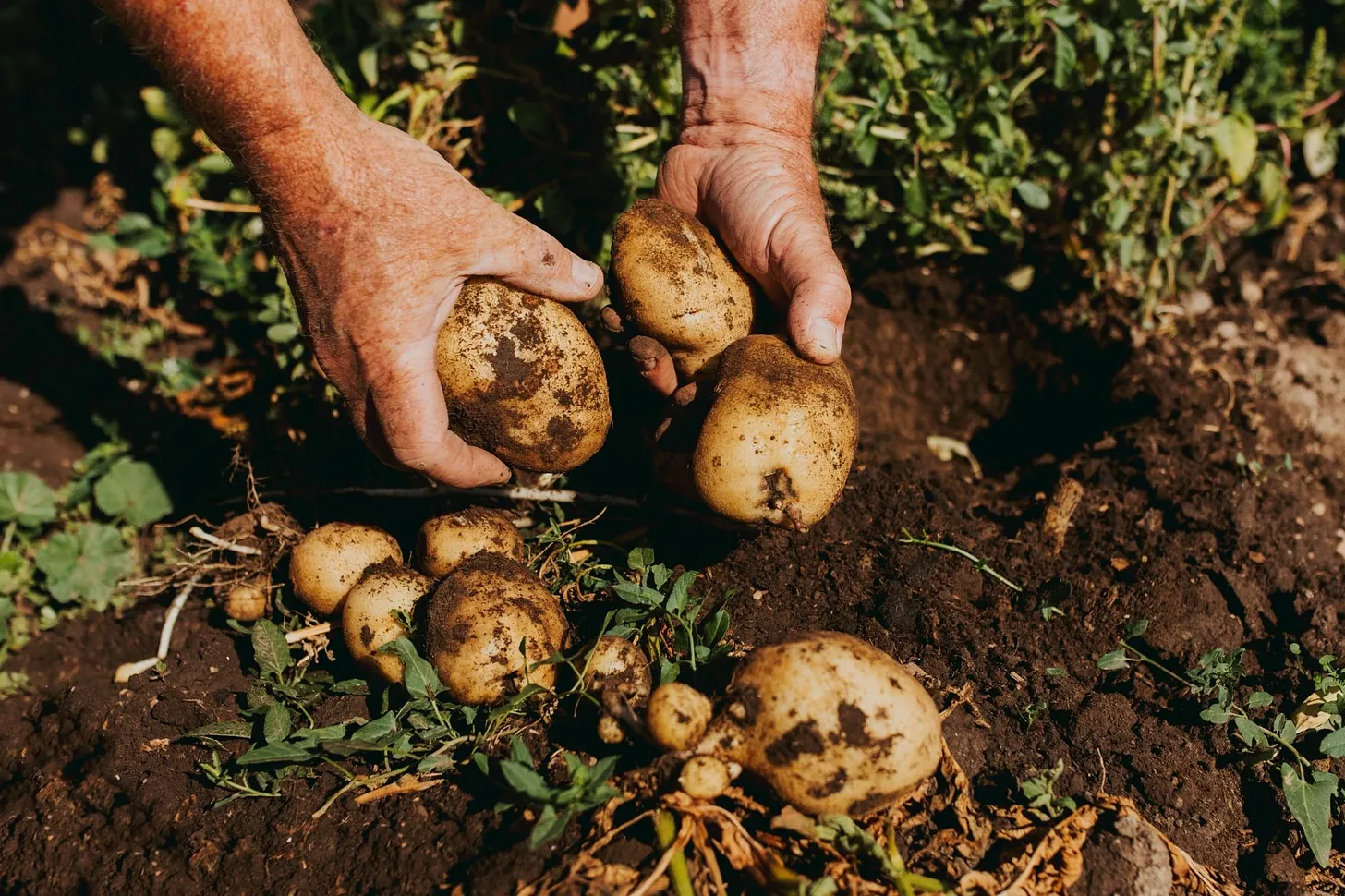
Photo provided by the author. Click on the image to enlarge.
At the level of your household, your garden, your relationships, your neighborhood, your community, or your watershed, the impacts of your agency are visible and direct. Cultivating biodiversity in your garden supports your harvest and the soil. Relationships deepen, and local institutions get slightly better because you showed up to the meeting you’d never gone to before. Every one of those actions begins a switchback on the terrain that’s right in front of you.
At the level of your bioregion and your job, the impacts of your agency are slower but still real. You can shape the culture of your workplace. You can contribute to a network of people working on shared problems.
At the civilizational level, agency is a lot harder to feel. The trends and systemic shifts are, by definition, the sum of individual choices, plus some emergence. Your contribution is real, even if you can’t see it clearly from where you stand. If many of us pursue switchbacks in our own terrain, possibilities open up at larger scales that none of us could have created alone.
Constrained futures are very different from determined futures. This concept is at the core of the ethos underpinning this channel. Our civilizational trajectory is constrained by physics, ecology, and the deep patterns of human behavior. This is all demonstrably true. But within those constraints, the difference between the best and worst versions of what’s coming is enormous. It’s the difference between the Long Repair and the Unraveling scenarios. Between communities that hold together and communities that fragment apart. And between a world your grandchildren can build a life in, and a world that is broken for them.
That difference is largely determined by what people do at the scales where their actions are visible. So you don’t need to try to save the world to make a difference. You don’t need to mitigate global heating by yourself. You can act at the scale where you can see the results.
This ties back to the start: protect what matters most. Build what you can build. Accept that your contribution is one of many. Trust that the sum of many people switchbacking on their own terrain and protecting the irreversible things near them is the mechanism by which the better futures have higher odds of arriving.
Reflection Coda
Over these six essays, I’ve tried to share with you the strategies I’ve personally developed for holding and responding to what’s ahead. That includes a framework for holding the future, a vocabulary to describe it, a landscape for understanding the terrain, and a few built worlds in order to emotionally feel the differences between composite futures. And now, a planning logic for acting inside it.
What I deliberately have not done is advise you on what to do: which domain to work in, which skills to build first, or which personal commitments to make. I don’t specify those things because those specific actions depend on who you are, where you are, what you love, what your passions are, what your community needs, and what phase of your life you’re in.
So I hope some of these questions can now move from the screen to your life and the actions you take within it.
What are you protecting? What are you building? And what are you willing to let go of?
Where are you switchbacking, and where are you letting things erode, maybe without even realizing it? Is there a unicorn commitment within you, something you love enough to focus on even if the work is narrower?
These aren’t one-and-done questions for any of us to answer this week. These serve as an open invite for you to return to and reflect on as conditions change … and as you change alongside them.
The future is going to keep surprising us. That’s what the future does! But people who have a method for thinking about it – who can hold multiple possibilities at once, who know the difference between reversible and irreversible, and who understand which direction the landscape is tilted – are harder to knock over when the inevitable surprises come.
That’s what I’ve attempted to convey with this series, “How to Think About the Future.” Instead of providing certainty or a concrete plan, this framework serves as a way of seeing all this while allowing you to stay oriented, even when the ground is shifting beneath us.
Thanks for bearing with me. This series has been a lot to unpack. As always, I appreciate you spending your time with my thoughts. I hope they can translate into some action in your own life. Until next time.
By the same author:
Watch With Both Eyes Open:
The Beauty and the Horror of Our Moment
ABOUT THE AUTHOR
Nate Hagens is the Co-founder and Director of The Institute for the Study of Energy and Our Future (ISEOF). Formerly in the finance industry at Lehman Brothers and Salomon Brothers, since 2003 Nate has shifted his focus to understanding the interrelationships between energy, environment, and finance and the implication this synthesis has for human futures. Allied with leading ecologists, energy experts, politicians, and systems thinkers, ISEOF assembles roadmaps for understanding how human societies might adapt to lower-throughput lifestyles. Nate also moderates the podcast The Great Simplification, on "illuminating the path for future generations, navigating uncertainty through understanding. and building a resilient future together."
|
|Back to Title|
LINK TO THE CURRENT ISSUE
LINK TO THE HOME PAGE