How renewable energy became another excuse to industrialize the natural world
America has a new environmental success story.
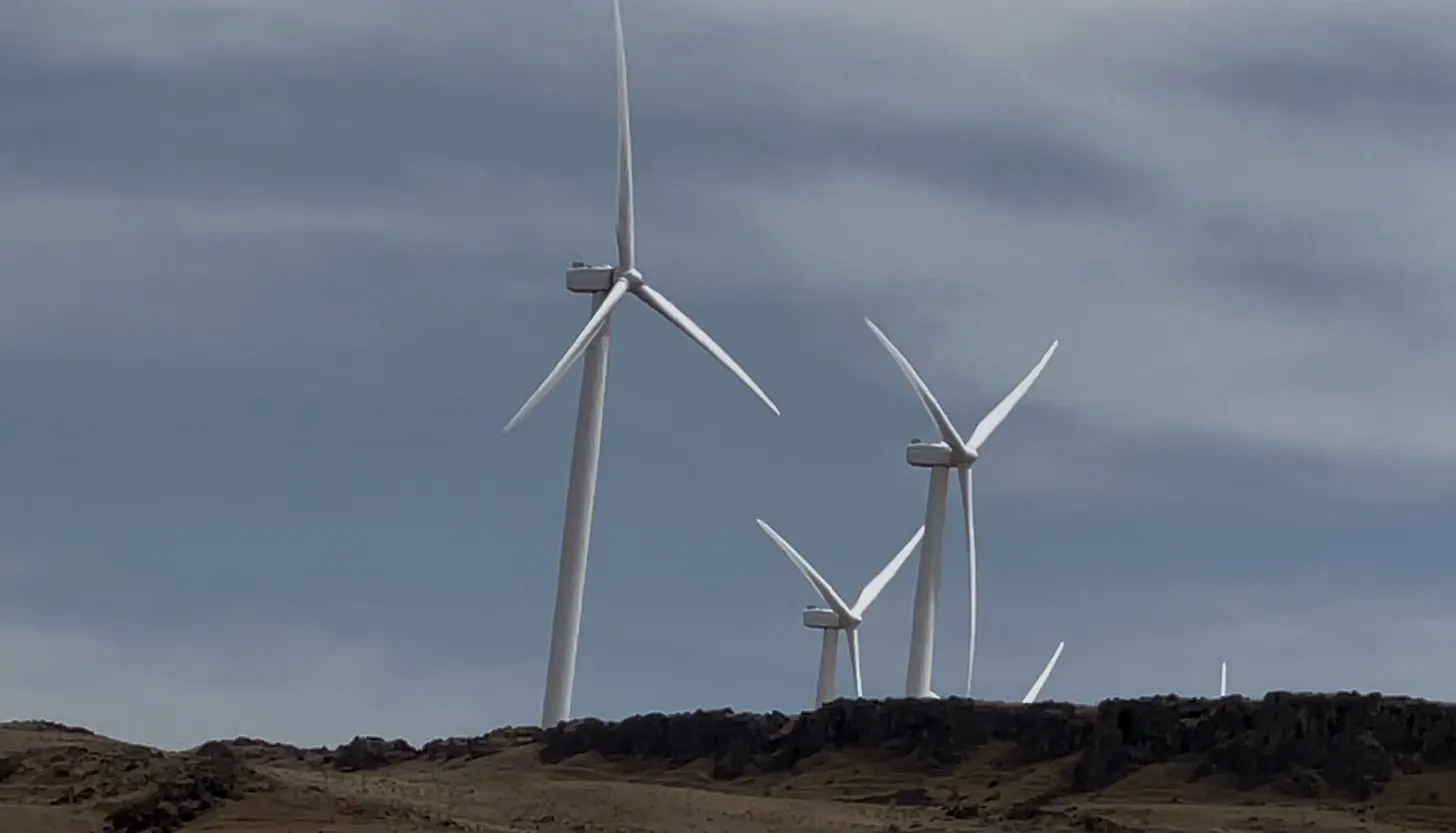
After nearly two decades of planning, permitting, litigation, and construction, the SunZia Wind and Transmission Project is generating electricity from more than 900 wind turbines scattered across central New Mexico. A 550-mile transmission line carries that electricity across the Southwest, supplying enough power for approximately one million homes.
The $11 billion project is being celebrated as an engineering marvel, a major step toward reducing carbon emissions, and proof that renewable energy development can overcome environmental opposition.
Even conservation organizations are celebrating. The National Audubon Society, which collaborated with the developer, Pattern Energy, has praised the project for incorporating measures intended to protect birds and their habitats.
Apparently, everyone wins. Except the ecosystems that once occupied the landscape.
The Land Beneath the Turbines
SunZia is enormous. According to figures presented by Pattern Energy in 2024, its wind development covers approximately 528,000 acres of New Mexico—more than 825 square miles.
That doesn’t mean every acre has been bulldozed. Wind turbines are widely spaced, vegetation remains between them, and much of the land can continue supporting livestock grazing and other human activities. But there’s a great deal more to a wind farm than the ground beneath its turbines.
SunZia required approximately 652 miles of access roads, 728 miles of trenching, and more than 2,200 miles of electrical collection cables. And that doesn’t include the 550-mile transmission line carrying electricity toward Arizona and California.
Roads are particularly troublesome. They remove vegetation, compact soils, change how water moves across the land, encourage erosion, divide wildlife habitat, and create pathways for invasive species and additional human disturbance.
Some construction roads and staging areas may be reclaimed after the turbines are installed. But the roads needed to maintain operating turbines must generally remain usable for decades. Turbines need regular servicing, repairs, and sometimes replacement of major components requiring heavy equipment.
These aren’t roads built for a temporary logging operation. They’re part of the machinery of electricity production. And when the turbines eventually come down, removing the roads won’t restore what was there before.
Researchers studying abandoned roads in the Mojave Desert found that soils and vegetation remained different from surrounding undisturbed landscapes even after as many as 88 years. Another Mojave study examined a disturbed aqueduct corridor after 36 years and estimated that recovering a plant community resembling the original could take centuries.
Neither study established that the original soils, biological soil crusts, water movement, or other ecological functions would ever fully recover. Some of these changes are effectively irreversible. Smoothing out an old road and getting plants to grow again can make the damage less visible, but there’s little reason to assume that time alone will rebuild an ecosystem whose underlying conditions have been fundamentally changed. Yet road reclamation is routinely treated as though it will eventually erase the environmental costs of construction.
And the land occupied by turbines, roads, substations, and transmission lines is only the final destination of an industrial process that begins somewhere else. Steel, concrete, copper, fiberglass, and other materials must be mined or manufactured, processed, and transported, sometimes across thousands of miles. Every step requires energy, infrastructure, and additional disturbance. Every step leaves something behind.
Those costs don’t disappear because they occur somewhere else. Nor do they end when the turbines begin producing electricity. Maintenance, replacement, and eventual decommissioning extend the process across decades. And as long as industrial civilization continues demanding electricity, the mining, manufacturing, transportation, and ecological disturbance required to produce it will continue.
Much of renewable energy’s ecological footprint is scattered across landscapes far removed from the places where electricity is generated. Those distant consequences rarely receive the same attention as the project itself.
The land directly disturbed by construction is only one measure of what has changed. Unfortunately, it’s also one of the easiest things to count.
When Protecting Birds Means Losing Habitat
Wind turbines kill birds and bats. That much is well established. But counting dead animals tells only part of the story.
One of the most common defenses of wind energy is that domestic cats kill far more birds than wind turbines. Fair enough. But let’s consider two hypothetical landscapes, each originally supporting 100 birds.
In the first, wind turbines and their roads are constructed. Some species avoid the development, and the number of birds occupying the landscape drops to twenty. Five of those remaining birds are subsequently killed by turbine blades. In the second landscape, there are no wind turbines. The habitat remains suitable for all 100 birds, but domestic cats kill fifteen.
Judging by fatalities alone, the wind development looks better. Five dead birds instead of fifteen. But the first landscape now supports only fifteen birds. The second supports 85.
Which landscape is doing a better job of conserving nature? Birds don’t have to be killed to lose their habitat. Some avoid turbines and the surrounding infrastructure. Others remain but become less numerous or change their behavior.
And where do the displaced birds go? Suitable habitat isn’t necessarily waiting somewhere else, conveniently vacant and ready for new occupants. Other birds may already live there, or the food, shelter, and nesting sites may be inadequate. The birds may have escaped the turbines, but that doesn’t mean they escaped the consequences.
We count the birds killed by turbines. We don’t count the generations of birds that will never exist because the landscape can no longer support them. This is how wildlife populations can disappear in plain sight.
This isn’t simply a hypothetical concern. Researchers studying wind development in native grasslands in North Dakota and South Dakota found that seven of nine breeding bird species avoided areas near turbines. Some effects extended hundreds of meters into otherwise suitable habitat and were still evident five years after construction. The study did not establish when, or whether, those effects would disappear.
An environmental assessment might report relatively few fatalities without showing whether the landscape still supports the birds that once lived there. Are they still breeding? Are enough young surviving to replace the adults? Can displaced birds find suitable habitat elsewhere?
Those questions become especially important when wind developments cover hundreds of square miles. A landscape can retain most of its vegetation while losing much of its value to the wildlife that once occupied it. It may look reassuringly green in a photograph, even as its biological community changes.
And unlike the ground cleared for construction, these effects can spread far into the surrounding landscape. They may persist for the entire operating life of a wind energy project, and possibly longer. If reproduction or survival suffers, the consequences may grow with each generation.
Birds aren’t the only animals affected. Researchers studying pronghorn in Wyoming found that some avoided wind turbines within their seasonal ranges, while others changed their migration behavior, including where they stopped along the way.
Responses varied among animals and seasons, but the findings demonstrated that wind developments can change how large mammals use land well beyond the areas disturbed by construction.
Even the continued presence of a species tells us little about whether the landscape still provides everything it needs to survive and reproduce. An animal doesn’t have to disappear for its habitat to become less useful.
The Bats We Rarely Count
Bats introduce another problem. We know wind turbines kill them. What we know much less about is how surviving bats respond to turbines during migration. Some bats appear attracted to turbines, increasing their risk of being killed. Others may avoid them, change their migration routes, or alter how they use nearby habitat. Exactly how these responses vary among species and individuals remains uncertain.
Counting carcasses won’t answer those questions.
New Mexico supports an exceptionally diverse collection of bats, including species that migrate across enormous distances. For them, a wind development can create risks far beyond the landscape where it was built.
Hoary bats are particularly vulnerable. They are among the bats most frequently killed at North American wind facilities. They also migrate across large portions of the continent and reproduce relatively slowly compared with many other small mammals.
That makes the loss of breeding adults especially consequential. A 2017 study warned that wind turbine deaths could threaten the species’ long-term survival. A later analysis suggested that existing wind development might already have caused substantial population declines.
More recently, a continent-wide monitoring analysis estimated that hoary bat numbers, as measured by relative abundance, declined approximately 24 percent between 2012 and 2023. Evidence of a decline is no longer merely theoretical, although how much of it can be attributed to wind turbines remains uncertain.
Silver-haired bats, another migratory species frequently killed at wind facilities, face similar risks. Mexican free-tailed bats are especially vulnerable in the Southwest, where their seasonal movements overlap extensively with areas attractive for wind energy development.
And here the story becomes particularly ironic. The same winds that make a landscape attractive for generating electricity may also make it attractive to migrating bats. Bats can use favorable winds to reduce the energy needed for long-distance travel. They adjust their flight behavior and altitude to take advantage of atmospheric conditions.
A 2024 study of Mexican free-tailed bats found extensive overlap between areas suitable for wind energy development and important seasonal bat habitat across the southwestern United States. Nearly 10,000 existing turbines were located within highly suitable fall habitat for the species.
Hoary bats complicate matters further. Their migrations don’t necessarily follow narrow, predictable corridors. Bats passing through one wind facility may have come from breeding grounds scattered across much of the continent.
That makes it extraordinarily difficult to determine which populations are paying the price. And it means the problem cannot necessarily be solved by identifying a few migration routes and placing turbines somewhere else.
The same landscapes we increasingly seek to exploit for renewable energy may be important to animals that evolved to exploit the movement of air. For bats, the wind that makes these developments profitable may also make them dangerous.
But there’s another problem. Bats are notoriously difficult to count. Researchers use acoustic detectors, mist nets, and other methods to estimate their numbers, but none provides a complete picture, particularly for species scattered across enormous landscapes. Populations can decline substantially before anyone is confident enough in the data to say so.
Nor are turbines operating in an ecological vacuum. Declining insect populations may already be reducing the food available to migrating bats, while other environmental pressures compromise their survival and reproduction. Turbines introduce additional mortality for bats and insects, and potentially additional energy costs for bats, into populations whose capacity to withstand further losses may already be exhausted.
We may already be killing bats faster than their populations can replace them, without knowing it. And we know remarkably little about what turbine-related insect mortality means for insect populations or the animals that depend upon them. By the time these consequences become unmistakable, reversing them may be extraordinarily difficult or impossible.
Not knowing whether a population is declining is not the same as knowing it is secure, but it is easy to pretend otherwise. And SunZia is hardly the only obstacle migrating bats may encounter.
Wind facilities are scattered across enormous areas of the American West, including southern Idaho, the Columbia River region, Wyoming, Nebraska, and New Mexico. Some form broad east-west bands of development that north-south migrants may have to cross. A bat surviving one wind facility may encounter another, and another, before reaching its destination.
The consequences can accumulate across the migration system, even when individual facilities report relatively modest losses. Temporarily slowing or stopping turbines during periods of high bat activity can substantially reduce fatalities. But even reduced mortality may exceed what already declining populations can withstand.
And collisions aren’t the only concern. Researchers have also found reduced activity by some bats near turbines at important drinking and feeding sites.
Yet the celebration surrounding SunZia offers little indication of what its hundreds of turbines may mean for migratory bats over the coming decades. The question isn’t simply how many bats will die. It’s how many additional deaths these populations can withstand before their ability to recover disappears.
Conservation Through Collaboration
One of the more revealing aspects of SunZia is the enthusiasm surrounding it among some conservation organizations. The National Audubon Society has described its collaboration with Pattern Energy as an example of how renewable energy infrastructure can be developed while protecting birds.
Much of Audubon’s documented involvement concerned the transmission line rather than the wind turbines themselves. Audubon helped influence the line’s route, reduce potential bird collisions, and establish measures intended to compensate for environmental damage.
Among the commitments were acquiring an approximately 1,100-acre irrigated farm along the Rio Grande for conversion to wildlife habitat and offsetting certain vegetation impacts in Arizona at a ratio of three acres for every acre affected.
These efforts shouldn’t be dismissed. Moving a transmission line away from important bird habitat can prevent genuine harm. Making transmission wires more visible can reduce collisions. Protecting land and securing water rights for wildlife can provide lasting benefits.
But the devil is in the details.
Buying a farm for wildlife doesn’t automatically make it better wildlife habitat. And protecting three acres somewhere else doesn’t necessarily replace what was lost when one acre was disturbed. What was there before? What changed afterward? Did the promised improvements actually occur?
Those are the questions that matter. Yet collaboration itself has become one of the environmental movement’s most celebrated achievements. The process is familiar.
A developer proposes a project. A conservation organization raises concerns. The developer agrees to modifications and mitigation measures. Everyone negotiates, reaches an agreement, and announces a successful partnership.
There may even be a photograph of smiling participants shaking hands. The project is declared environmentally responsible. But what happened to the original ecosystem? Somewhere along the way, the success of the agreement became more important than the fate of the land.
The two parties enter these negotiations with fundamentally different objectives. The developer wants to build an industrial facility. The conservation organization presumably wants to protect biodiversity.
If the facility gets built with modifications that reduce some of its environmental impacts, the developer has achieved its primary objective. The conservation organization may have prevented some damage or secured genuine benefits elsewhere, but the ecological losses remain.
One side gets what it came for. The other negotiates how much of what it came to protect will be lost. And often, the conservation organization enters those negotiations knowing the development will proceed with or without its participation. The choice becomes accepting whatever concessions can be obtained or risking getting nothing at all.
Under those circumstances, even modest concessions can be celebrated as major victories. Success is no longer measured by how much nature is protected, but by how much less is lost than might otherwise have been. The definition of conservation success has quietly changed.
And sometimes, among the concessions celebrated as environmental achievements, is funding for additional research. Research into what? The consequences of developments that have already been approved, built, or placed into operation?
Research can reveal problems and identify ways to reduce future damage. But its findings protect nothing unless they lead to meaningful action. Once an industrial facility is operating, changes can become difficult, especially when they interfere with production or cost more money.
There’s something circular about the arrangement. Developers propose projects whose ecological consequences aren’t fully understood. Conservation organizations negotiate funding to study those consequences. The projects proceed, the research continues, and the partnerships are celebrated as conservation achievements.
Meanwhile, the ecosystems under study continue experiencing the consequences.
The relationship between development and environmental research raises another concern. Independence. When developers financially support conservation research or organizations involved in their projects, potential conflicts of interest deserve scrutiny. But the financial relationships can be less obvious.
Biological surveys and environmental assessments are frequently conducted by consultants paid by the developers seeking approval. Sometimes government agencies establish the survey requirements but leave the selection and payment of the consultants to the applicants themselves.
That doesn’t necessarily mean the research is dishonest or scientifically deficient. But it raises an uncomfortable question. How independent is an environmental assessment when the organization paying for it has a financial interest in the outcome?
And there are ways to influence environmental conclusions without falsifying a single observation. Survey requirements can be narrowly defined. Uncertainty can be emphasized. Inconvenient findings can be challenged, while the absence of conclusive evidence of harm becomes an argument for proceeding.
The resulting studies may satisfy regulatory requirements without answering the ecological questions that matter most. Even entirely independent research, good-faith negotiations, and successful mitigation agreements can accompany significant ecological degradation.
This helps perpetuate one of the most enduring myths surrounding environmental protection: that conducting an environmental study somehow demonstrates that the environment has been protected.
Biologists surveyed the area. Species were documented. Impacts were evaluated. Mitigation measures were proposed. The paperwork is complete. The project moves forward. But a study may document what is about to be lost without preventing any of it from disappearing.
We have become remarkably adept at documenting environmental destruction and calling the process environmental protection. None of this establishes that scientific findings or conservation positions have been compromised in any particular project. But transparency matters, especially when conservation organizations publicly endorse industrial developments.
And none of this requires anyone to have bad intentions. Nearly everyone involved probably believes they’re doing the right thing. In my experience, most people do, regardless of what they’re doing. I certainly believe I’m doing the right thing by writing this essay.
Which probably tells you something about the reliability of good intentions. Perhaps the deeper problem is that collaboration can gradually change conservation’s purpose—from defending ecosystems to negotiating the terms of their industrialization.
A successful agreement is not a successful ecological outcome.
The Arithmetic of Progress
SunZia is expected to provide enough electricity for approximately one million homes. That sounds impressive. But California and Arizona together consume vastly more electricity than SunZia can produce.
Using electricity consumption figures from 2024, and assuming SunZia operates at an average annual capacity factor of 40 percent, matching the annual electricity sold to customers in those two states would require approximately 26 developments the size of SunZia.
That’s a comparison of annual electricity production, not a suggestion that those states could simply run on wind power alone. Electricity demand changes throughout the day and year, and wind doesn’t always blow when electricity is needed. A reliable system would require additional infrastructure.
But consider the land. At SunZia’s reported density, those 26 developments would cover nearly 14 million acres. That’s approximately 21,500 square miles—more than six Yellowstone National Parks combined. Imagine roughly 24,000 wind turbines scattered across that landscape, connected by an access-road network approaching 17,000 miles.
For perspective, that’s more than six times the combined mileage of all paved and unpaved roads in six Yellowstones. And that’s before accounting for additional long-distance transmission lines, energy storage, and other facilities needed to deliver electricity reliably.
To be clear, 14 million acres doesn’t mean 14 million acres of bulldozed ground. Much of the vegetation could remain, and the actual area required would vary with wind conditions, turbine placement, and project design.
But standing vegetation doesn’t guarantee a functioning ecosystem. As the research on birds, bats, and pronghorn illustrates, the effects of wind development can extend well beyond the land cleared for construction.
Multiply those effects across thousands of turbines and thousands of miles of roads, and the ecological consequences can reach far beyond anything captured by a simple calculation of disturbed acreage.
And even that much electricity wouldn’t replace all the energy those states consume. Transportation, manufacturing, heating, and other activities still depend partly on fuels that would require additional electricity if replaced through electrification.
The larger question isn’t whether wind energy can generate electricity with lower greenhouse gas emissions than fossil fuels.
It can.
The question is how much of the natural world we’re prepared to industrialize to satisfy our growing appetite for energy.
The Environmental Benefits We Choose to Measure
There’s something peculiar about how we measure the environmental benefits of renewable energy. We celebrate the greenhouse gas emissions avoided, the homes powered, and the fossil fuels displaced. Then we account for the ecological costs through acres disturbed, mitigation agreements, and compliance with environmental regulations.
But these aren’t interchangeable measures. Preventing carbon emissions doesn’t put a fragmented landscape back together. Burning less fossil fuel doesn’t rebuild compacted soils, restore lost wildlife communities, or reconnect habitats divided by roads and transmission lines.
That doesn’t make fossil fuels environmentally preferable. But replacing one damaging energy system with another doesn’t automatically mean we’re restoring nature.
We may reduce one set of pressures while creating or intensifying another. And the problem becomes especially important as electricity demand continues to grow. Rather than asking how much energy we actually need—or how much of the natural world we’re willing to sacrifice to produce it—we increasingly treat demand as something that simply must be satisfied.
More electricity requires more generation. More generation requires more infrastructure. More infrastructure requires more land, minerals, roads, transmission corridors, and industrial development.
Each new project can be justified by the carbon emissions it promises to avoid. But add enough projects together, and entire landscapes are transformed. Because we usually evaluate environmental damage one project at a time, the cumulative consequences can be surprisingly easy to overlook.
An Ill Wind for Conservation
For much of its history, conservation was primarily concerned with protecting places from industrial development. Forests, wetlands, grasslands, deserts, and rivers had value because of the life they supported and the ecological processes that sustained them. Their value didn’t depend on producing electricity, generating revenue, or accommodating another industrial facility.
Today, conservation increasingly emphasizes compromise, common ground, and partnerships. Those approaches can sometimes reduce genuine harm. But they can also normalize the assumption that industrial development is inevitable and that conservation’s job is simply to make it less destructive.
The compromises may be politically practical, economically attractive, and publicly celebrated. None of that demonstrates that the resulting development does not significantly degrade the ecosystems it affects.
SunZia may substantially reduce greenhouse gas emissions compared with the fossil-fuel electricity it replaces. That’s a meaningful benefit.
It also represents another substantial transformation of landscapes whose biological complexity developed over thousands of years.
Both can be true.
What troubles me is our willingness to celebrate one while treating the other as an acceptable cost of progress.
Perhaps the greatest accomplishment of modern environmental collaboration has been convincing ourselves that making industrial development less destructive is equivalent to conserving nature.
We’ve learned to export the ecological costs of industrial civilization so effectively that we can celebrate environmental progress at the destination while overlooking environmental degradation at the source.
And convince ourselves that nature is winning.
By the same author:
Elizabeth Holmes and the Business of Saving the World
ABOUT THE AUTHOR
Lyle Lewis is an ecologist and writer exploring deep time, human behavior, and the Sixth Mass Extinction. Essays cut through comforting myths to show how plastics, climate, biodiversity loss and other crises intertwine.
|
|Back to Title|
LINK TO THE CURRENT ISSUE
LINK TO THE HOME PAGE