Today’s essay is the third in a series covering the basics of oil – from what it is to how we’ve built our civilization around it, and why it can’t last. In this final installment, we’ll look to the future of our systems in a world with less.
The Carbon Pulse
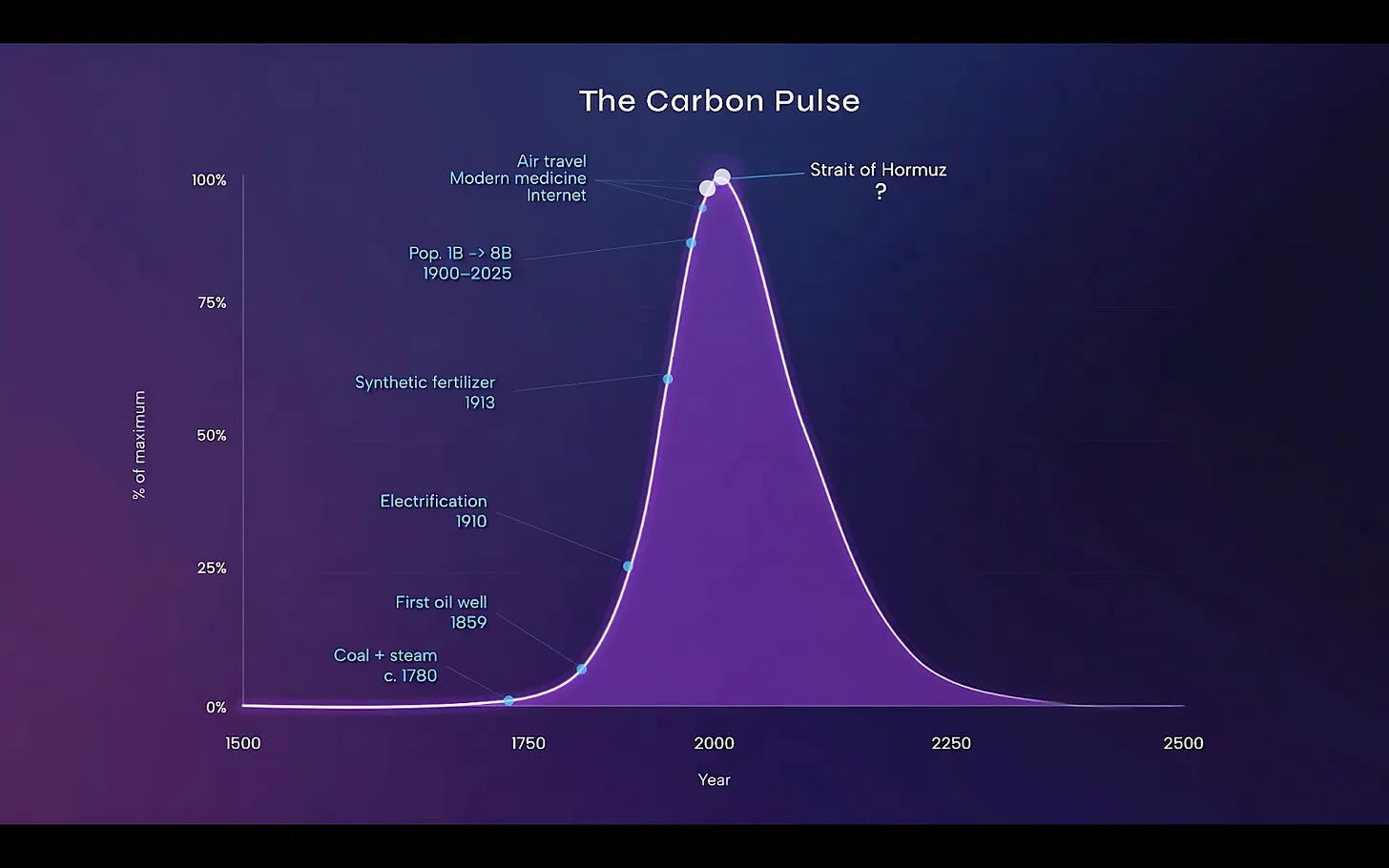
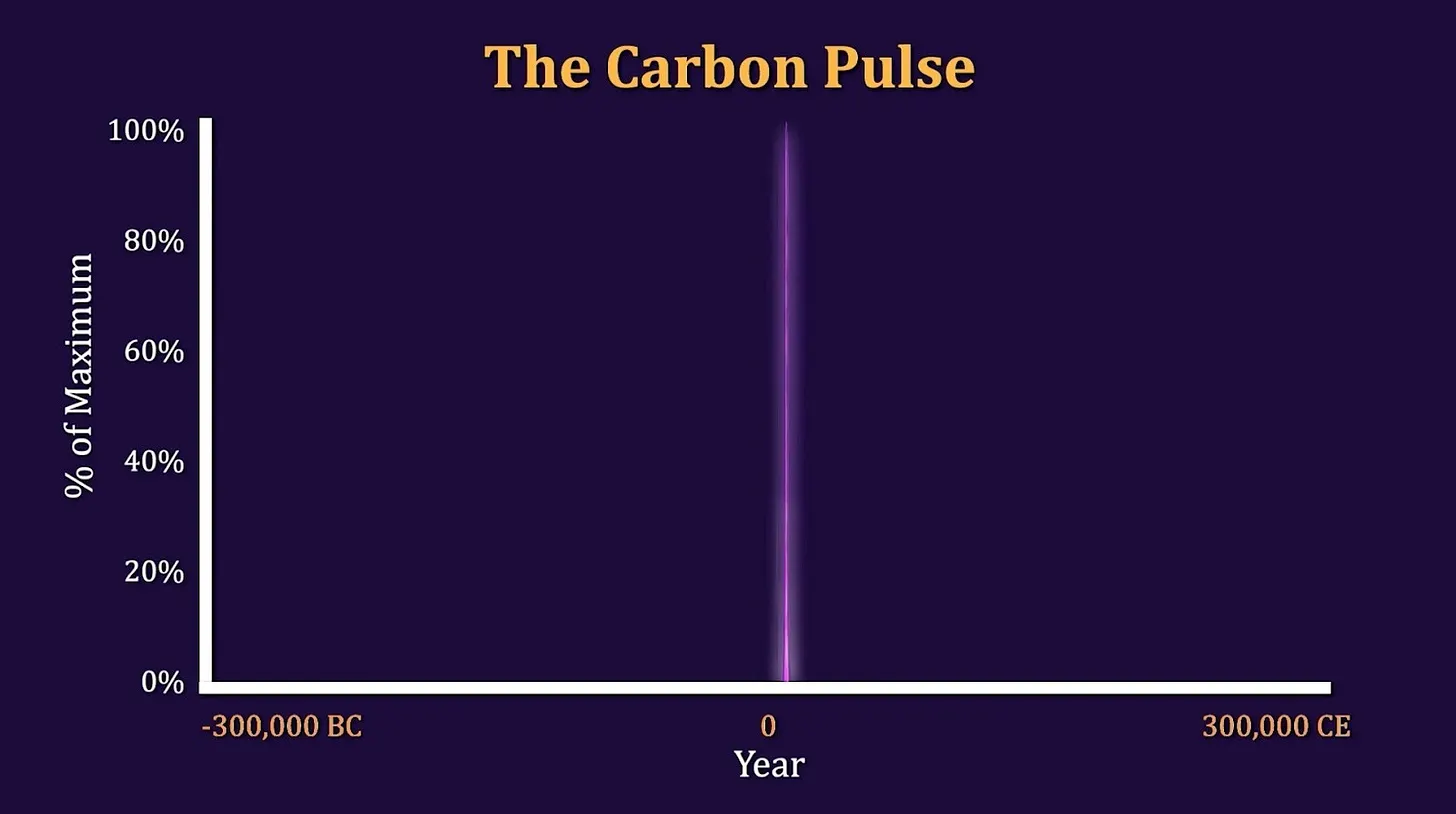
Everything I’ve described in this series is part of a single phenomenon. For a brief window in geologic time, humans discovered, accessed, and burned through an extraordinary one-time inheritance of ancient stored sunlight. I call this the Carbon Pulse.
Click on the image to enlarge.
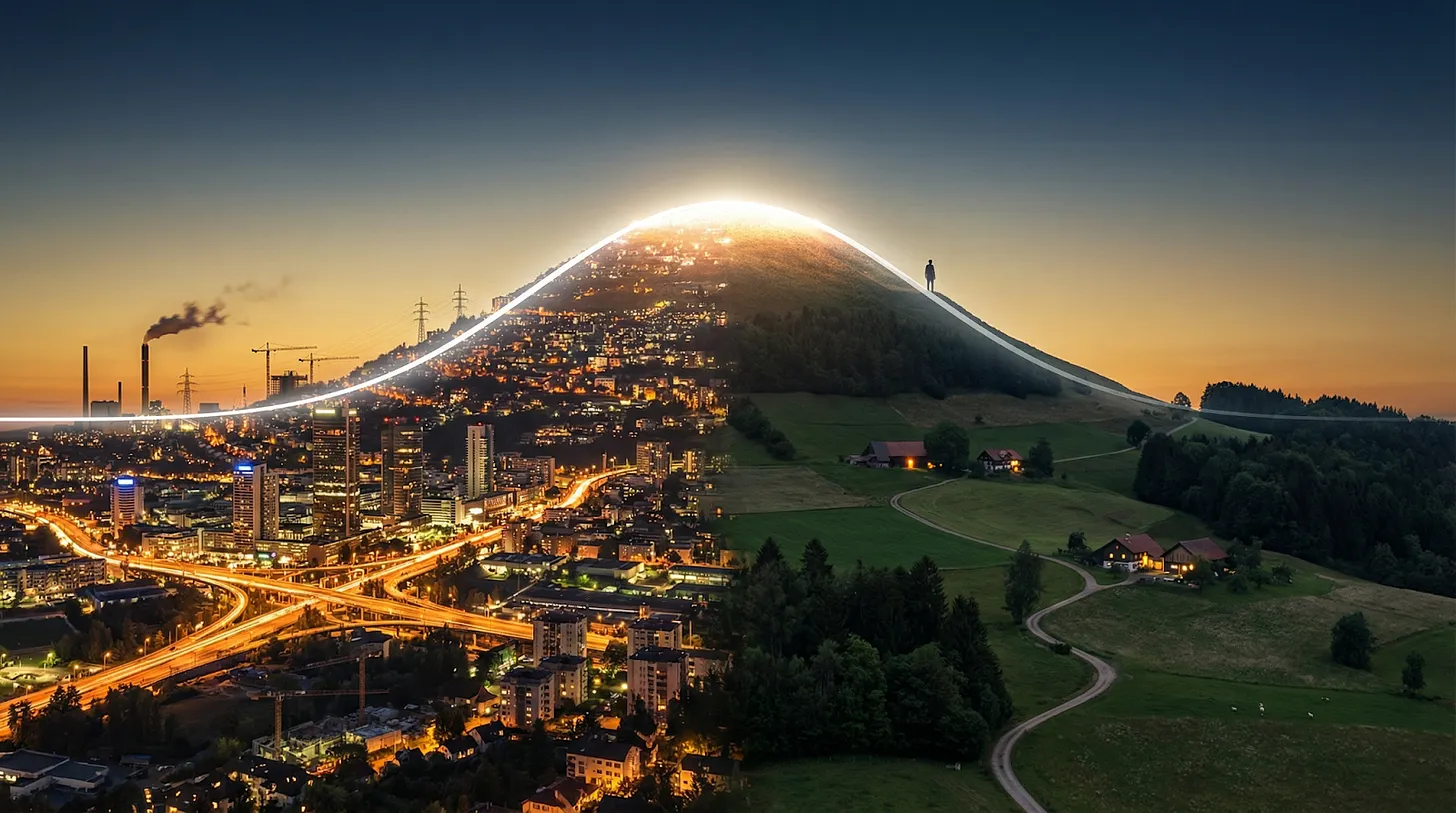
Picture a bell curve stretched out over ~300 years. We’re somewhere near the peak of this curve right now, and what’s unfolding with the Strait of Hormuz may prove to be a marker of that peak or an accelerant past it. On the way up, the Carbon Pulse gave us abundant cheap energy to power modern civilization: population growth from one to eight billion, industrial agriculture, global supply chains, modern medicine, electrification, the internet, air travel, and the complexity of modern governance.
The human economy – which is people multiplied by goods and services per person – is now 1000 times bigger than 500 years ago. This lens is missing from virtually all mainstream discussions and analysis around economic and political issues. We’re making long-term plans, taking on long-term debts, and building long-term institutions and financial systems – and they’re all based on the assumption that the energy and material largesse at the top of the Carbon Pulse is a permanent plateau. It isn’t. It goes up, and it will come down…likely soon.
The Real Role of Money
This downslope of the Carbon Pulse has implications for every dimension of civilization, but especially our economic system. The economy runs on energy and material flows – full stop. We think it runs on money, but money is just a marker, a claim on the real physical work. When money is created, it is created without reference to how much oil, gas, forests, copper, orangutans, or butterflies exist in the world.
Click on the image to enlarge.
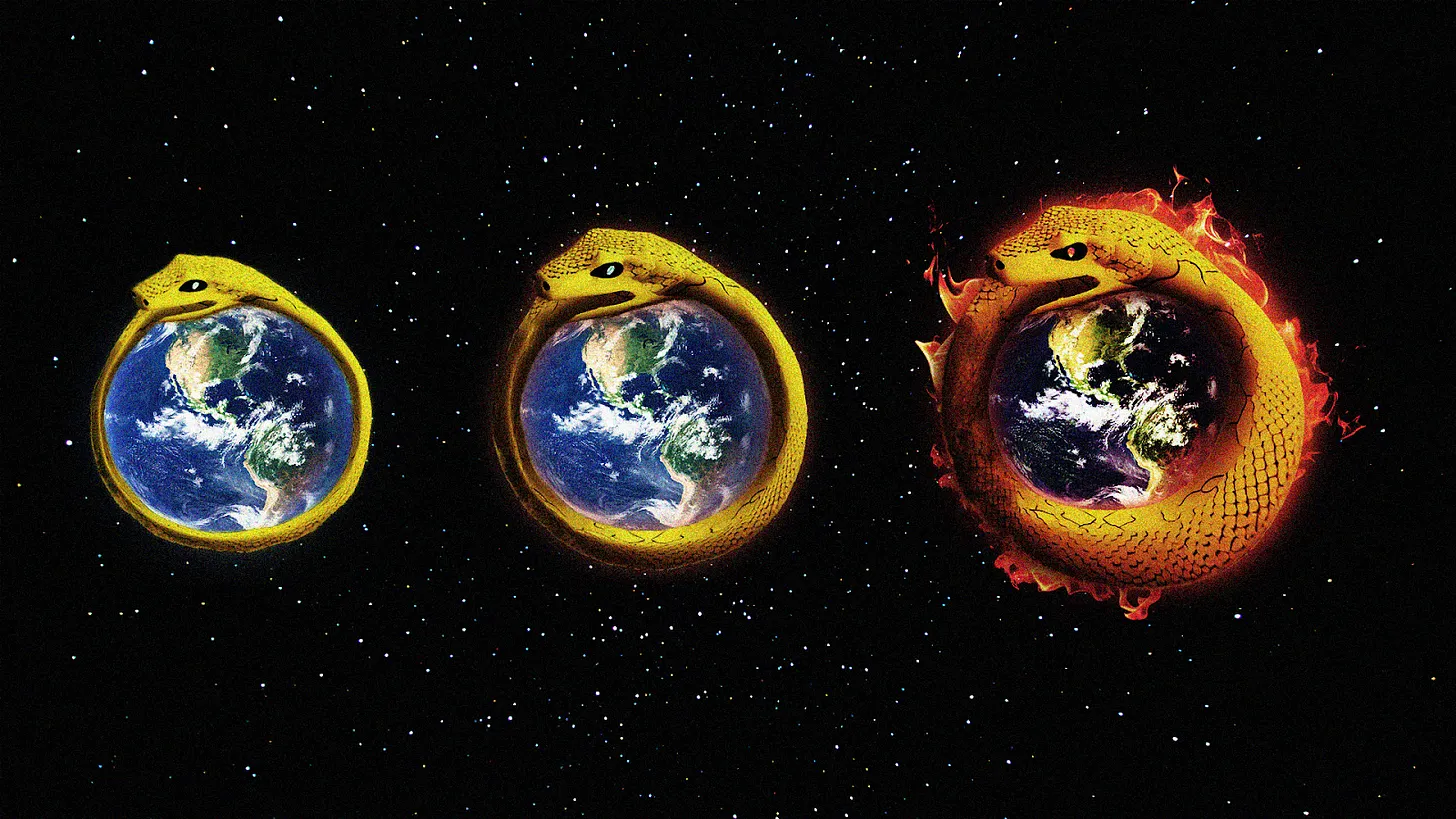
As world events cause oil to get more expensive, less available, or both, we will respond out of necessity by governments and central banks offering guarantees, writing checks, and printing more money. Yes, we can and will print money. But we cannot print energy, we can only extract it faster, and extracting it faster requires us to print more money. It’s kind of a biophysical ouroboros.
The current growth-based financial system and its Byzantine array of financial claims is all predicated on having more energy – affordable energy – every year. The entire structure of debt, interest, and repayment assumes a future that is bigger and materially richer than today. When the energy supply contracts, those monetary claims don’t just take a time out… they crack, along with the associated bonds and currencies and markets.
We have been drawing down the principal of the main input to our economies, but our universities, stories, institutions, and media are treating it as if it were interest. As we covered in the previous essay, the geology of shale is punishing: rapid depletion and constant drilling just to stay flat on returns. What is even less discussed is that shale was as much a financial phenomenon as a geological one. Cheap money made expensive oil temporarily viable. When capital tightens or interest rates rise, the financial scaffolding collapses and the underlying depletion problem becomes worse.
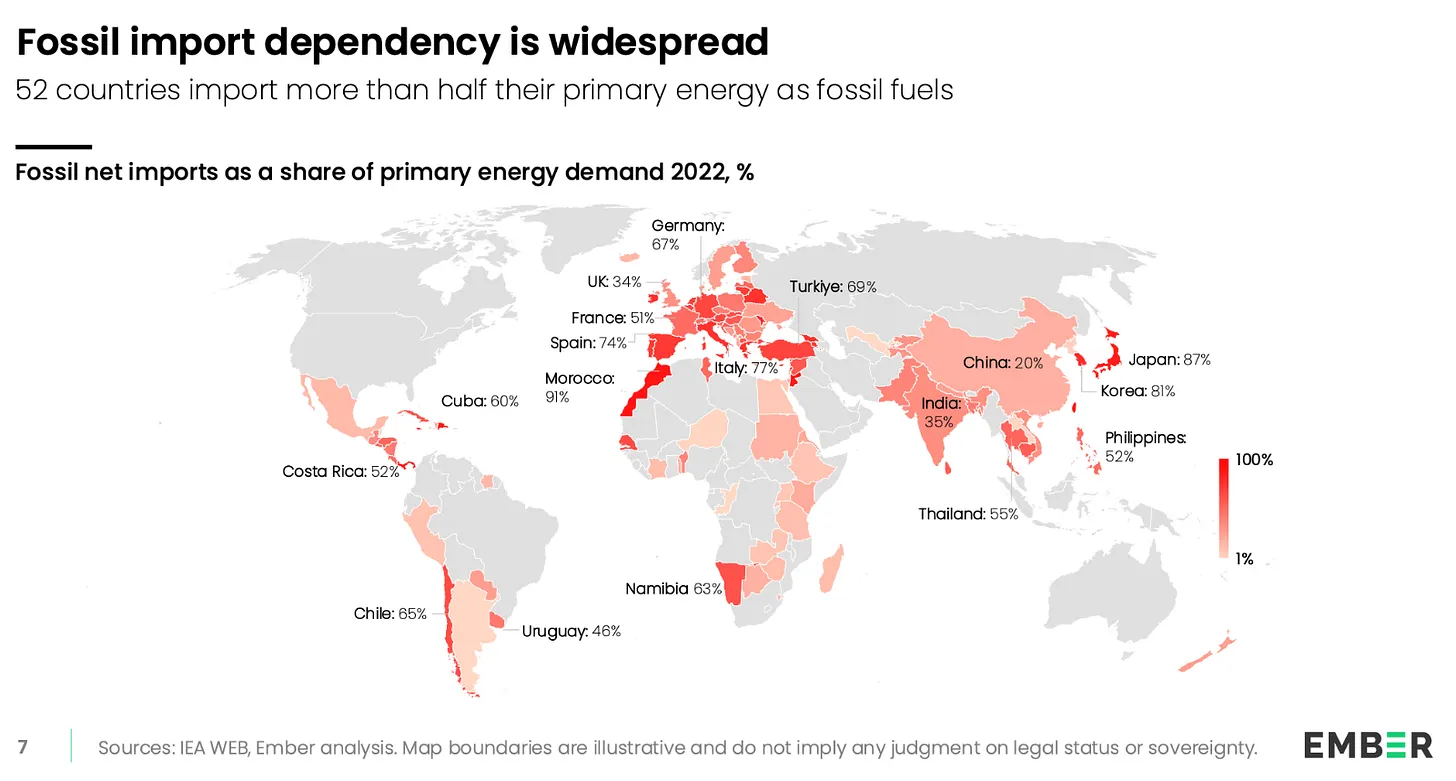
The Hormuz situation, unless resolved very quickly, is going to wreak havoc on global financial markets, especially in those countries who have to import a great deal of fossil energy.
Two Sides of the Same Crisis
There’s one more aspect to this not being linked to current discussions of Hormuz in the media. The energy crisis and the climate crisis may feel like separate problems, but they’re not. They’re actually two sides of the same crisis.
If we don’t stop burning fossil carbon at this scale, we risk the biosphere’s ability to function in ways that support future civilization and the broader web of life. Simultaneously, we’re running low on the high-quality oil inputs that our lifestyles depend on. These feel like separate problems, but they’re two faces of the same predicament. The Carbon Pulse created both the unfolding ecological crisis from burning too much and the depletion crisis from drawing it down too fast. The question isn’t whether we can keep burning, but rather what kind of civilization can we build on the downslope while also protecting the living systems we depend on?
Click on the image to enlarge.
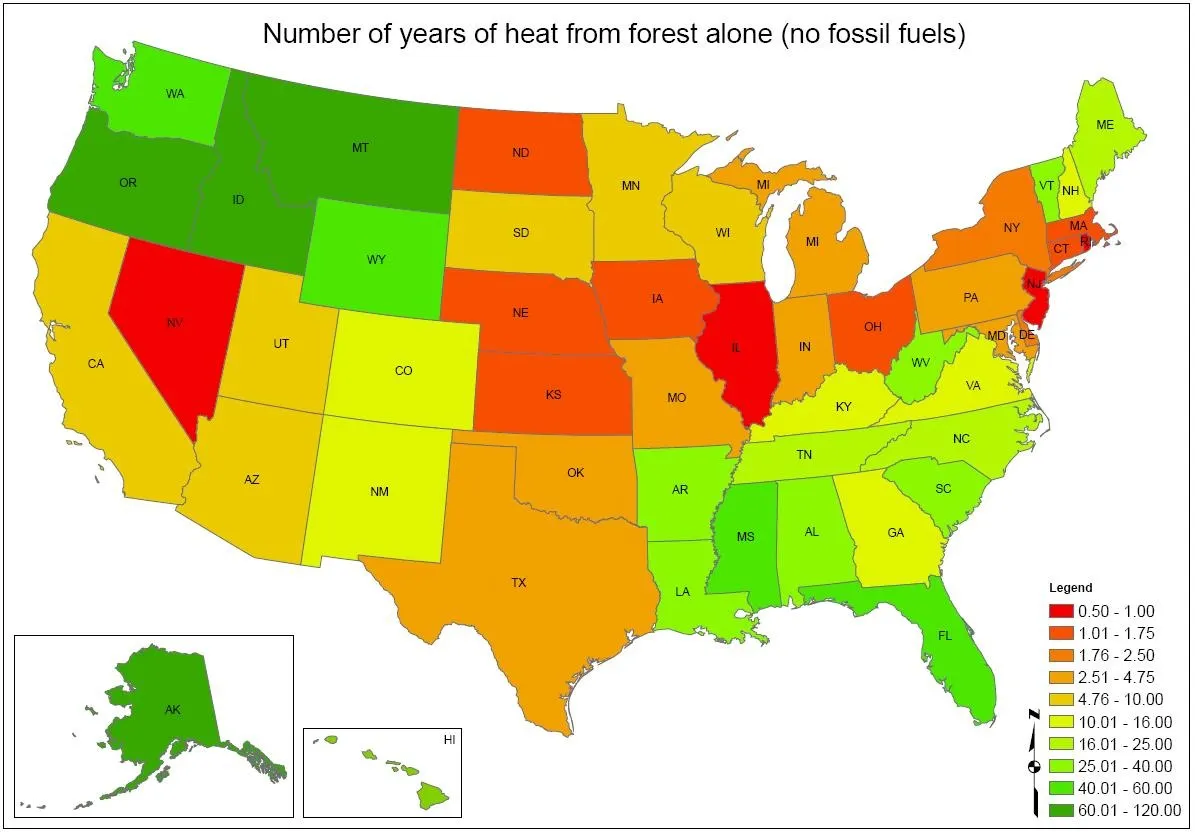
History shows what happens when civilizations lose their primary energy source: they turn to wood. Easter Island, the U.S. seaboard in the 19th century, and Greece after the Great Financial Crisis in 2009 are a few examples. If you compare the standing forest stock in the United States to just the fossil energy we use for winter heating, most states would be stripped bare of trees within a year or two. On the down slope of the Carbon Pulse, the world’s forests are at risk from both climate change and human desperation. Same cause, same story.
Within all of this, the eight to ten million other species on this planet have no voice and no vote. They didn’t sign up for the Carbon Pulse. They don’t benefit from GDP. On the contrary, they are bystanders to a species that accessed a one-time energy inheritance and used it to reshape the entire living world.
Click on the image to enlarge.
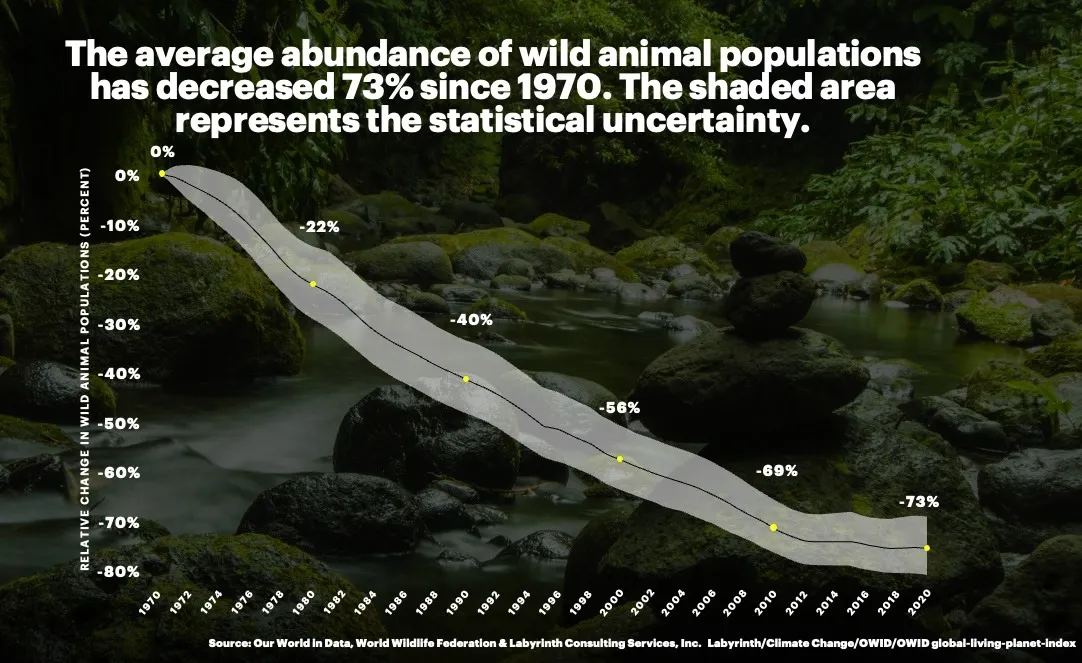
Whatever we decide to do on the downslope of the Carbon Pulse, they will bear the consequences. On average, 70% of monitored wildlife populations have already disappeared since 1970. The Great Simplification will determine whether that trend accelerates, or whether enough humans choose to actively protect what remains.
A Geopolitical Downslope
On top of all that, the geopolitical dimension of this predicament is already playing out in real time. We’re witnessing a war over two thirds of the world’s remaining conventional oil reserves in the Middle East. The countries that are best positioned to provide oil at high flow rates to the world in 20 to 30 years – Iran, Iraq, and Russia – are the very ones the West is currently attacking or sanctioning. We are simultaneously dependent on, and in conflict with, the people living in the geography that holds the world’s future energy supply.
Almost nobody is discussing the second and third order effects of the current Hormuz crisis. Over 40% of the world’s sulfur supply, critical for mining and industry, transits the strait. So does the liquified natural gas that Europe depends on after cutting off Russian pipelines. So does the feedstock for nitrogen fertilizer, which feeds four billion people. This is more than an oil story – it’s a cascading food, chemicals, and industrial story.
Click on the image to enlarge.
As energy becomes scarcer and more contested, geopolitics is not going to become more collaborative and more rational. It will become more desperate and focused on energy security, especially as nations hoard and alliances fracture. The most vulnerable countries, the ones that are dependent on importing energy and food, are going to be hit first and hardest. Currencies and bond markets built on an unending horizon of cheap, dense, and affordable energy will become unstable as trusted markers. The post-WWII global order was built on the foundation of cheap abundant oil tied to American military and financial might. That relationship is now in question.
Nations are now choosing sides based not on ideology, but on energy access. China has signed 27-year gas deals with Qatar and long-term oil contracts with Iran and Russia. The Gulf states are now hedging between Washington and Beijing. Europe, after cutting off Russian pipeline gas, now depends on liquified natural gas that transits the same strait that’s currently closed. We’re watching the real-time fracturing of a global order that was always – underneath the flags and the treaties – an unseen and unstable energy arrangement.
The alliances of the next 30 years will be determined by who has hydrocarbons and energy access and who needs it. All of this points in one direction – simplification.
Managed or Unmanaged Simplification?
When monetary claims exceed the productive energy and material capacity to support them, there will eventually be a recalibration. This is what I refer to as the Great Simplification. It doesn’t necessarily mean collapse, this simplification could be a conscious scaling back – a simplification of systems and a reorientation toward what actually matters.
We’ve been living in two economies simultaneously without knowing it: one using technology and money, and an underpinning one using energy and materials. If we remain energy blind and try to solve the situation with money and technology alone, it’s likely to be chaotic, unequal, and devastating.
Humanity has always been good at creating tools to meet the challenges of our current situation. Managing our own psychology is much harder. Energy decline will trigger political conflict, scapegoating, and short-term thinking at exactly the moment we’re going to need long-term foresight and cooperation. Loss aversion means that people fight harder to keep what they have, rather than to gain something new. Every instinct, shaped by evolution and reinforced by modern culture, will push toward clinging, hoarding, and blaming.
The superorganism, which is shorthand for our collective consumption metabolism incentivized for growth, doesn’t downshift gracefully. Understanding this, and naming it, is the first step toward steering it.
I don’t believe this is a story about doom – it’s a story about a species growing up. It’s physics, biology, geology, and psychology. The better we understand all four and how they interrelate, the better our choices become.
The Real Transition
Let’s take a step back, because while the bulk of this series has been focused on our 21st-century predicament, the Carbon Pulse brings us to a species-level conversation.
Click on the image to enlarge.
On a time scale of a few hundred thousand years, the Carbon Pulse doesn’t look like a curve at all, but more like a straight line, because it would take millions of years to recharge a battery of this size, scope, and quality. We’re consuming these incredible resources in a few short hundred years. Our fossil armies will only be with us for one fleeting moment – a century or two – and what we choose to do on the downslope of the Carbon Pulse will define whether we live up to our nickname of “wise ape.”
Here’s what I’ve come to believe after 20 years of studying this: the Carbon Pulse gave us extraordinary material wealth, but it also subtly narrowed our definition of a good life to one measured by consumption, convenience, speed, and stuff. Pursuit of happiness became pursuit of more. And yet, the psychological research is remarkably consistent: beyond a threshold of basic needs being met, more stuff does not produce more wellbeing.
What produces wellbeing and meaning is connection, purpose, maturity, time in nature, skills, community and relationships, service to something beyond yourself, and a sense of belonging. These are ancient satisfactions that do not require ancient sunlight, because they predate the Carbon Pulse by hundreds of thousands of years. They don’t require a barrel of oil, but they do require us to re-strengthen skill sets and muscles that have been eroded away in our modern context. Things like trust, collaboration, communication, conflict management, and a shared sense of purpose.
The simplification ahead is going to be disruptive and likely painful in many ways, but it also will reopen a door that cheap energy quietly closed – the door to a life organized around what actually matters, rather than what the economic superorganism optimizes for. The most meaningful life available to a human being has never required 200,000 calories per day, and never will.
We have a brief window of time to figure out what comes next. This is the conversation that matters – energy, ecology and human behavior. That’s what this channel is for. In coming weeks, I’ll continue with a series called “A Guide to Staying Human” about how to take in reality at this scale and still act with purpose. Because the questions were never really about whether the Carbon Pulse would end, but when, how, and what comes after.
After spending two centuries building a civilization on something most of us couldn’t see, the recent events in Iran are forcing us to see it. From here, we need to ask ourselves, who will we be at the top? And who do we want to be on the way down?
I do not know how the Strait of Hormuz situation will resolve, but I hope it resolves quickly and benignly. If it does, I hope we use it as a dress rehearsal for rethinking our plans, our relationships, and our culture.
Nate Hagens is the Co-founder and Director of The Institute for the Study of Energy and Our Future (ISEOF). Formerly in the finance industry at Lehman Brothers and Salomon Brothers, since 2003 Nate has shifted his focus to understanding the interrelationships between energy, environment, and finance and the implication this synthesis has for human futures. Allied with leading ecologists, energy experts, politicians, and systems thinkers, ISEOF assembles roadmaps for understanding how human societies might adapt to lower-throughput lifestyles. Nate also moderates the podcast The Great Simplification, on "illuminating the path for future generations, navigating uncertainty through understanding. and building a resilient future together."