When I was invited to write a chapter on men in feminism for a scholarly book, I told the editors that I would have to include discussion of my writing on the radical feminist critiques of pornography and transgender ideology, which are controversial subjects in academic feminism. They assured me that wouldn’t be a problem, but I submitted a draft early because I’ve had editors reject such writing at the last minute. Their response did not surprise me: “The editorial team has met and decided the article does not fit with our mission for the book.”I’m grateful to Julie Bindel for offering to run the essay on her Substack in installments, starting with today’s introduction to the challenges for men in feminism. The second part makes a case for radical feminism and analyzes masculinity-in-patriarchy. Part 3 deals with pornography, and Part 4 analyzes transgender Ideology. The final installment argues for feminism from men’s self-interest and reflects on dilemmas for men in feminist projects.
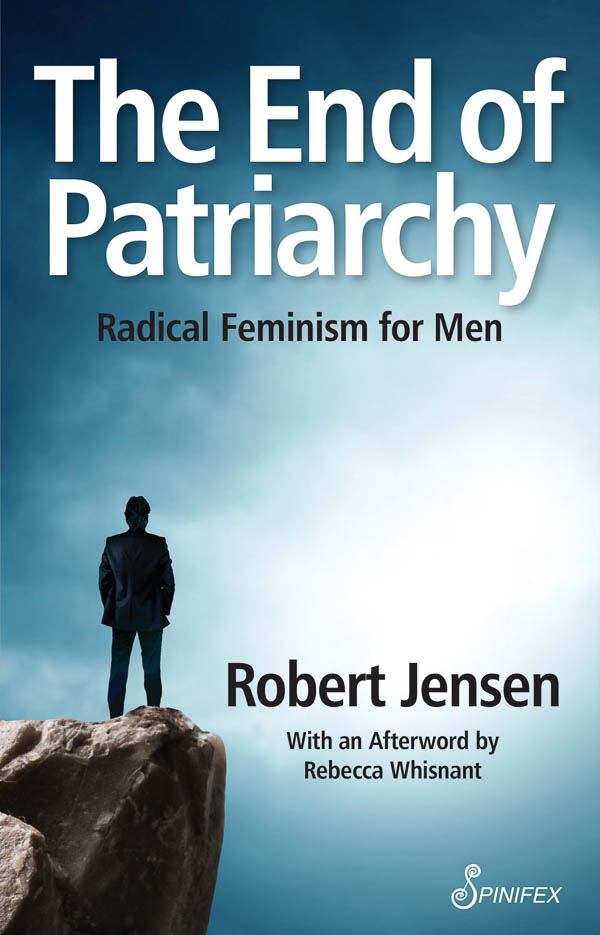
Readers of this Substack will recognize some of these ideas from articles of mine that Julie has published over the past few years or from my books Getting Off: Pornography and the End of Masculinity (2007) and The End of Patriarchy: Radical Feminism for Men (2017)
I can’t know what the term “radical feminism” means to readers today because that philosophy has been marginalized in most academic and political settings in the United States. But during my time in graduate school (1988-92), radical feminism was an important part of feminist conversations.
I have long joked that when I started studying feminism, I already knew a lot—feminists were ugly women who couldn’t get dates. In other words, I was ignorant in the way many men are trained to be ignorant. The first concept I had to wrap my head around was patriarchy, the various incarnations of institutionalized male dominance in public and private spheres. In the late 1980s, feminists had to argue that despite the gains of the women’s liberation movement, the world remained patriarchal. That’s more obvious today in the United States, given the celebration of old-school patriarchal values by so many men in power. But patriarchy’s fundamental claim—that males and females were created or evolved differently for different purposes, with men on top—never disappeared.
In the 1960s and ‘70s, second-wave feminists challenged patriarchal claims that men’s domination and exploitation of women are natural and inevitable, and distinguished biological sex from social constructions of gender. Cultural ideas about gender emerge out of sex differences—if we were not a sexually dimorphic species it’s hard to imagine the concepts of masculinity and femininity emerging—but today’s gender norms reflect the unequal distribution of power between men and women since patriarchy emerged a few thousand years ago. Because some in the transgender movement have rejected this feminist account of sex and gender, it’s useful to restate some basics.
Sex differentiates between male and female based on the physiological characteristics associated with distinctive roles in reproduction and doesn’t change because of social systems. Sex is biological and binary. Gender differentiates between masculine and feminine based on ideas about the meaning of male and female, claims that are neither uniform across societies nor static within any society. Gender is a social construction that reflects institutionalized male dominance.
Radical feminism challenges male dominance and rejects patriarchy’s rigid, repressive, and reactionary sex/gender norms. Radical feminism analyzes the ways in which women are oppressed as a class and men as a class hold more power, and how those differences systematically disadvantage women. Sex/gender oppression plays out in different ways depending on social location because men’s oppression of women is affected by other systems—racism, heterosexism, class privilege, and histories of colonial and postcolonial domination.
Many feminists would endorse that summary. Distinctively, radical feminism rejects social hierarchies across the board but understands patriarchy as the foundational system of domination and subordination, as the late Andrea Dworkin articulated in her first book in 1974:
The commitment to ending male dominance as the fundamental psychological, political, and cultural reality of earth-lived life is the fundamental revolutionary commitment. It is a commitment to transformation of the self and transformation of the social reality on every level. (p. 17)
Radical feminists argue that a key site of men’s oppression of women is sexuality. Radical feminists organize to end men’s sexual violence and harassment but also reject the buying and selling of objectified female bodies in pornography, prostitution, and other sexual-exploitation industries. Radical feminists critique surrogacy, the business of renting women’s wombs not only to infertile heterosexual couples and gay male couples, but now also to women who don’t want to carry a fetus. Most controversially, radical feminists have critiqued transgender ideology.
I describe the dominant approach to feminism in academia and politics as liberal/postmodern, even given differences between liberal and postmodern theory. Liberal feminism’s priority is challenging barriers to women’s participation in public, such as business and politics. Postmodern feminism challenges the stability of the category “woman” and emphasizes how language constructs social categories. But liberal and postmodern feminists have one thing in common: Rejecting radical feminism. Most liberal and postmodern feminists reject the critiques of pornography and of trans ideology, sometimes arguing radicals shouldn’t be considered part of feminism.
I have no standing to resolve these conflicts but encourage men to embrace the radical critique. Women are welcome to read my work, and I’m glad if it is helpful. But I have always written about feminism primarily for men.
Masculinity-in-patriarchy
Men routinely cause problems for women, the consequence of how men are socialized in patriarchy. But if we aren’t intrinsically “bad to the bone,” why are men so often “breaking bad”? Understanding masculinity today requires an analysis of masculinity-in-patriarchy.
Consider the children’s game King of the Hill, in which the object is to capture the top of the hill and then repel challengers. Both boys and girls might play King of the Hill, but in my experience it was a boys’ game. King of the Hill illustrates two characteristics of the dominant conception of masculinity: No one is safe, and everyone loses something.
King-of-the-Hill masculinity, which leads men to seek control over “their” women and find pleasure in that control, is dangerous for men as well. Because there can be only one person at the top, other men must be subordinated to the king, who must always worry about who is coming up that hill. The king can form alliances, but those allies can turn on him when they see an opening.
Men also play this game. A friend who once worked on Wall Street described coming to work as “walking into a knife fight when all the good spots along the wall were taken.” Every day you faced the possibility of getting killed, figuratively, with no reliable protection. Patriarchal masculinity means endless competition and ever-present threat. Men don’t always have to play, but no guy will be seen as normal if he challenges the rules too often.
There are no universal standards for masculinity that all men embrace everywhere, hence the term “masculinities.” As in most social systems, there is variation and resistance. But this dominant conception of what it means to be a man—competition for control to avoid being subordinated—continues to dominate. We teach our boys that to be a man is to be tough, to be acquisitive and aggressive. We congratulate them when they hit hard on the football field. We honor them in parades when they return from killing enemies. We put them on magazine covers when they dominate business competitors and make billions. Sometimes, we elect them president.
Whatever the material benefits of masculinity, it’s exhausting and unfulfilling. No one man created this system and many men wouldn’t choose it if presented with better options. Patriarchy deforms men, narrowing our emotional range and limiting our capacity to experience the rich connections with women, children, and other men that require the vulnerability that “real men” so often run from. The Man Who Would Be King is the Man Who Is Broken and Alone. A normal guy is, eventually, a miserable guy, no matter how much wealth and power he accumulates.
Patriarchy constrains men but isn’t equally dangerous for men and women. As feminists have pointed out, there’s a big difference between the threats of harassment, rape, and exploitation that women face, and men being trained not to cry. But the short-term material gains that men get in patriarchy are not adequate compensation for what we men give up in the long haul—surrendering part of our humanity.
This doesn’t mean all men have it easier than all women. Those other systems of dominance—white supremacy, heterosexism, predatory corporate capitalism, international inequality—mean that non-white men, gay men, poor and working-class men, and men in the Global South suffer in various ways. Sometimes everyday life is just hard for everyone. A radical feminist analysis doesn’t ignore those problems but rather helps us understand the sources of suffering.
But I am wary of promoting “healthy masculinity” to challenge “toxic masculinity,” a project too often detached from any feminism, let alone radical feminism. Healthy is better than toxic, but without recognizing that the problem is masculinity-in-patriarchy, men will be tempted to embrace kinder-but-gentler forms of male supremacy. For example, however effective the antiviolence campaigns “My Strength is Not for Hurting” and “Real Men Don’t Rape” have been, both rely on patriarchal notions—men strong/women weak, and Real Man/Sissy Man. We don’t have to abandon such campaigns, just be aware of their limitations. (See my book Getting Off: Pornography and the End of Masculinity, pp. 145-147.)
Most of my writing has focused on how masculinity plays out in sexual relationships, straight or gay, bringing the King of the Hill into our most intimate spaces. This doesn’t mean that every man in every sexual situation seeks dominance, but many men struggle with that training. The ways that men use cruel and degrading sexualized images of women in pornography is testimony to this reality.
Next in Part 3: Pornography
Links to Parts 1, 3 to 5:
Not Just an Ally: Radical Feminism for Men ~ Part 1 of 5
Not Just an Ally: Radical Feminism for Men ~ Part 3 of 5
Not Just an Ally: Radical Feminism for Men ~ Part 4 of 5
Not Just an Ally: Radical Feminism for Men ~ Part 5 of 5
|Back to Title|
LINK TO THE CURRENT ISSUE
LINK TO THE HOME PAGE