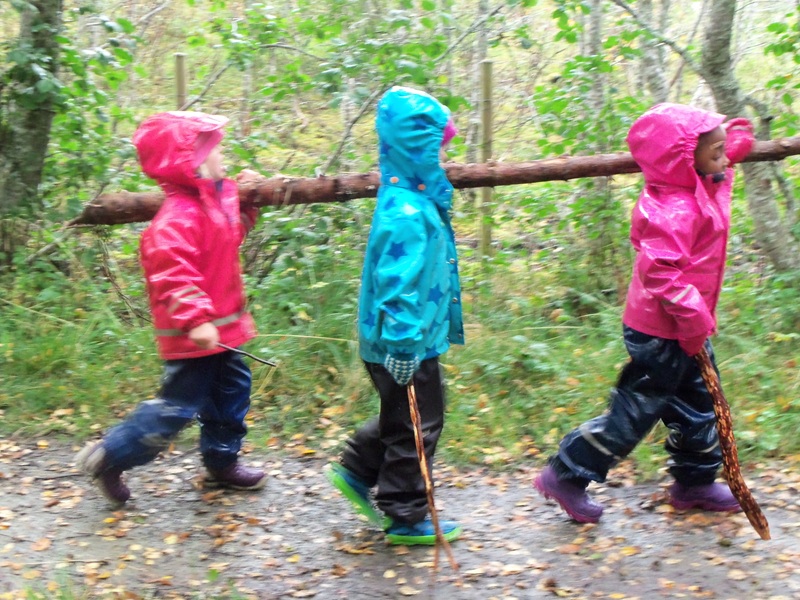
In a time when reconnecting children with nature is increasingly seen as essential for more sustainable futures, outdoor learning practices have gained renewed attention. Within these practices, however, certain assumptions and routines are rarely questioned.
How children are introduced to nature in early years education is not neutral. They shape how nature is perceived—whether as something to be controlled, protected from a distance, or engaged with as a living, dynamic system we are part of.
Before taking children outdoors, we often establish what are called “agreements.” We say things like “We don’t pick flowers,” “We don’t step on ants,” or “We don’t break branches.” In many contexts, these are referred to as forest school agreements. But an important question remains: is this truly an agreement? Although “agreements” are commonly referenced in outdoor and forest school practices, the extent to which children genuinely participate in shaping these expectations is rarely examined in detail.
|
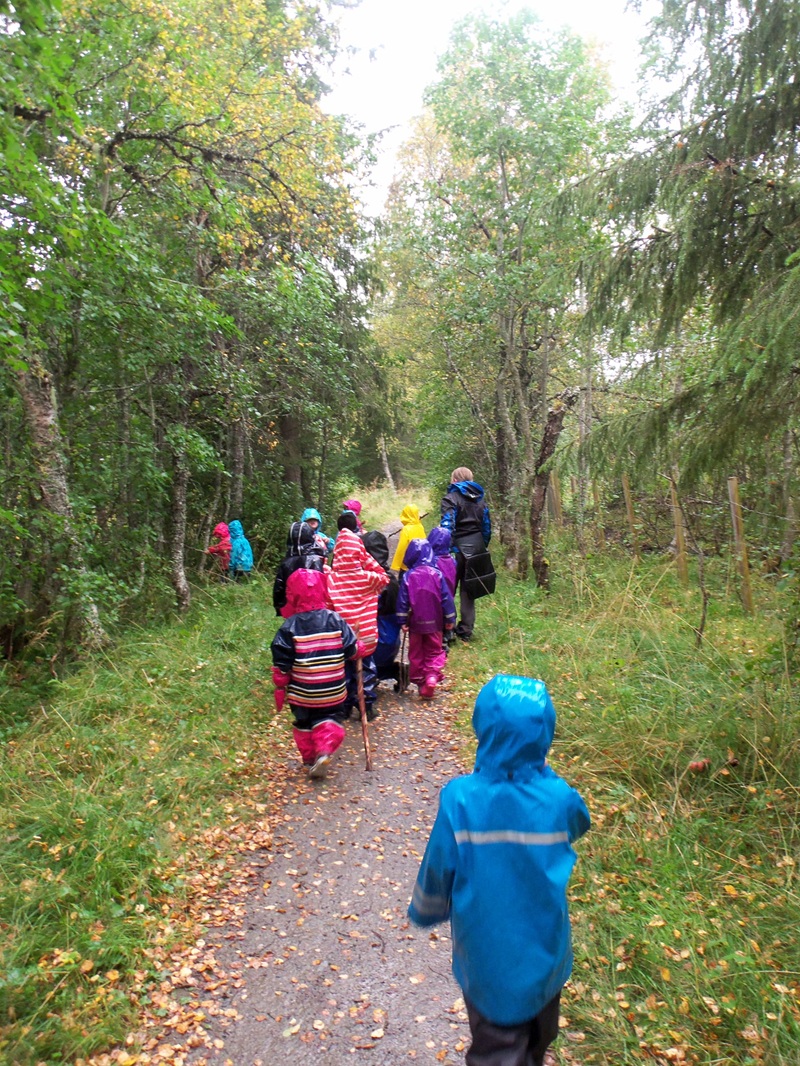
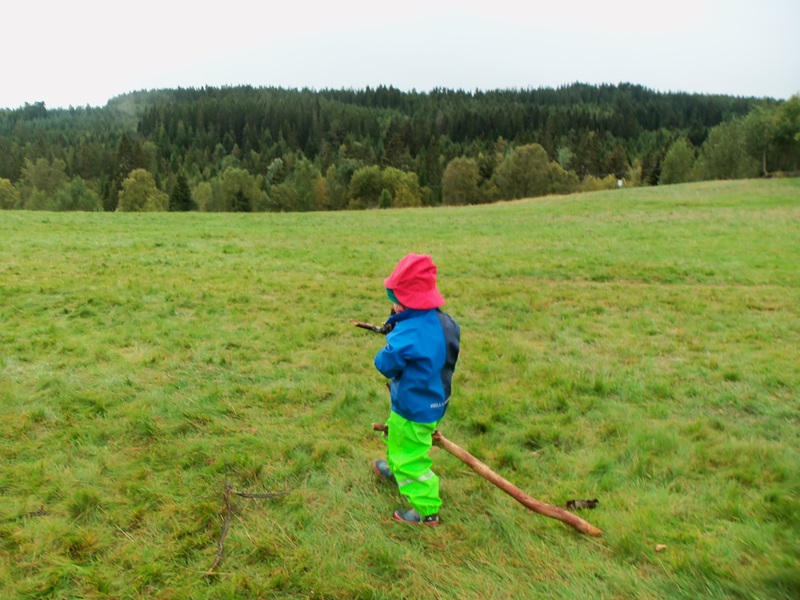
Photos provided by the author.
Click on the images to enlarge.
|
An agreement, by definition, involves mutual participation, negotiation, and the possibility of disagreement. It assumes that all parties can propose ideas, object, and contribute to shaping the outcome. However, in many real-life practices, adults define the framework in advance, and children are expected to accept it. In such cases, what is described as an agreement may function less as a negotiated process and more as an adult-defined expectation - at times, a subtle form of imposition.
The intention behind this language is often positive. Educators aim to create a more participatory, democratic, and respectful environment. Yet there is a subtle but important gap between the language of participation and its reality. When children are not genuinely able to negotiate, refuse, or reshape what is presented, calling it an “agreement” risks becoming pedagogically misleading. It may unintentionally communicate that children’s voices matter, but only within boundaries already determined by adults. This brings us to a critical question: are we truly supporting participation, or are we, perhaps unintentionally, creating the appearance of it?
Perhaps the real issue lies not in the existence of rules, but in how we understand and construct them. Rules are necessary. They exist to protect ourselves, other people, and living beings, and the environments we inhabit - both built and natural. In this sense, rules reflect expectations of behavior and play an important role in social and emotional development, provided that they are constructed in pedagogically sound ways.
Seen this way, the question is not whether rules should exist, but how they are framed, justified, and experienced. We need to ask: is this rule genuinely necessary, or does it reflect over-protection or excessive control? Does it contribute to creating a “safe enough” environment, or does it aim to eliminate all forms of risk?
Furthermore, is the rule understandable for the child? Is it expressed in clear, concise, and positive language? Most importantly, is it developmentally appropriate and realistically applicable for the child? The pedagogical value of a rule lies not in how gently it is named, but in how meaningful, comprehensible, and livable it is.
Not all rules can or should be co-constructed with young children. While participation is valuable, it must also be understood in relation to children’s developmental capacities. Some boundaries, particularly those related to safety and care for others, remain the responsibility of adults. Participation, in this sense, does not mean transferring responsibility, but sharing it meaningfully.
A similar tension appears in how we frame children’s relationship with nature. In some practices, children are encouraged to thank a tree for giving fruit or to apologize for breaking a branch. While such practices may aim to cultivate care and respect, they may also risk becoming performative if they are detached from lived experience. This raises an important question: does a child build a meaningful connection with nature through prescribed expressions, or through direct, embodied engagement?
Research by Louise Chawla suggests that what shapes later environmental responsibility is not the early imposition of correct behaviors, but the presence of meaningful, direct experiences in nature. When children are allowed to explore, test boundaries, and engage with the natural world in open-ended ways, they develop a personal connection that can support care over time. In this sense, connection does not follow from instruction; it precedes it.
David Sobel reminds us that children’s relationship with nature develops in stages, and that early experiences should be rooted in joy, exploration, and emotional connection rather than premature moral responsibility. When expectations about care, protection, or ethical behavior are introduced too early or too prescriptively, they may not deepen children’s relationship with nature but instead risk turning it into something externally regulated. In this sense, connection precedes responsibility; children protect what they feel connected to.
Drawing on Joseph Cornell’s approach, meaningful connection with nature may be understood as emerging through experiences of flow - through observing, listening, sensing, and being present. In such moments, feelings such as appreciation or gratitude may arise. However, these cannot be imposed or prescribed; they tend to develop as internal responses to authentic engagement with the more-than-human world.
When a child breaks a branch, the pedagogical response need not be an expectation of an apology. Instead, it can become an opportunity for reflection. What happened? Why did it happen? How might we act differently next time? Rather than inducing guilt or prescribing the “correct” response, educators can create space for children to develop awareness and responsibility through dialogue and reflection.
This also invites us to imagine alternative approaches. Instead of framing expectations solely in advance, educators might engage in shared exploration with children, noticing together what the environment affords and requires. Boundaries can be negotiated where possible, and when they cannot, they can be made explicit and meaningful rather than disguised. Through co-exploration, reflective dialogue, and attention to the unfolding moment, children can participate not only in following expectations but in understanding them. Developing an ecological relationship requires more than following rules; it requires experiencing interdependence.
The way children relate to nature in these early encounters shapes not only their personal development, but also their future relationship with the more-than-human world. Forming a relationship with nature does not require treating it as human. Supporting participation does not happen through terminology alone. Responsibility does not develop by repeating rules, but by engaging in meaningful decision-making.
This invites a further question: perhaps the real question is not how we explain nature to children, but how much opportunity we give them to experience being part of it. These early encounters may shape not only how children behave in nature, but how they understand their place within it.
ABOUT THE AUTHOR
Nilgün Cevher-Kalburan is a professor in the Department of Early Childhood Education at Pamukkale University, Türkiye. Her work focuses on nature-based education, outdoor play and learning, risky play, and teacher education. She is committed to fostering meaningful, child-centered learning environments and promoting ecological awareness in early childhood settings. You can follow her work at @outdoor.play.turkiye.
|
|Back to Title|
LINK TO THE CURRENT ISSUE
LINK TO THE HOME PAGE