Recap
This post is the second in a two-part exploration of six identifiable sustainability paradigms. The previous post featured two major pro-growth sustainability paradigms: Techno-Optimism (cornucopian) and Green Growth. If you haven’t read it, at least scan it to get an idea of what I and a growing number of informed humans think will not be sustainable for a long-term future. Also, earlier relevant posts featuring various aspects of sustainability include: How We Got This Way—An Unsustainable Existence; What Does Sustainability Mean?; and Two Contrasting Paradigms: Pro-Growth vs. Post-Growth.
The previous post also presented a succinct definition of sustainability that was developed by the UN’s World Commission on Environment and Development in 1987. Simply stated, sustainability is . . . “Development that meets the needs of the present without compromising the ability of future generations to meet their own needs.”
In this post, four de-growth and post-growth paradigms are introduced, and all present realistic humane responses in addressing the growing metacrisis that threatens the foundations of life on planet Earth. The four paradigms are degrowth, post growth, radical (deep) sustainability, and post-doom adaptation.
Degrowth and Post-Growth Paradigms
With the goal of reducing environmental impact and enhancing quality of life, post-growth and degrowth perspectives advocate shifting economic focus from GDP growth to sustainable well-being. Such strategies propose a planned, equitable downscaling of global production and consumption (particularly in the Global North) to align with planetary ecological boundaries. In short, the degrowth movement argues that pursuing growth in GDP is fundamentally incompatible with ecological stability.
The core concepts of degrowth focus on 1) reducing material usage throughout the global economy, 2) redistributing wealth, and 3) promoting a transformational shift from overconsumption of materials to a state of wellbeing, not only for humans but for all lifeforms. It follows that such measures will ultimately lead to smaller, localized economies.
A sizeable representation of degrowth proponents argues for instituting humane strategies in reducing global human population. Hence, degrowth may be thought of as a planned, democratic reduction of material and energy throughput to achieve social justice and ecological stability.
Most degrowth proponents also identify with post-growth perspectives, the idea being that once degrowth to a sustainable level is achieved, a sustainable existence needs to be in place. As an umbrella term, post-growth – along with degrowth – covers perspectives that move beyond the imperative of economic expansion, with a focus on creating sufficiency and well-being. Another perspective is based on agrowth, essentially a neutral, agnostic stance toward GDP that focuses on goals other than growth.
So, the common goals of degrowth and post-growth are centered on attaining ecological sustainability, wellbeing, and equity. Achieving such lofty goals will require reducing resource consumption to stay within planetary boundaries – and prioritizing the flourishing and care of all beings and things over achieving material wealth. Moreover, democratic principles are needed, including shifting decision-making from economic interests to collective, community-led processes.
Key Strategies and Policies include: 1) reduced working hours, achieved by sharing available work to enhance the quality of life for workers; 2) universal basic services/income to ensure that essential needs are met without reliance on constantly rising economic growth; 3) circular/localization for promoting local, sustainable, and repair-focused economies; and 4) policy tools that utilize frameworks like Kay Raworth’s “Doughnut Economics“ model to guide policy. Similar economic concepts are also represented by the steady-state economy and ecological economics, with both stressing the importance of maintaining a stable population and restrained resource use that works within planetary limits.
Mainstream and techno-optimistic sustainability proponents criticize degrowth as a more radical concept because it focuses on downsizing. In contrast, post-growth is perceived as a broader, less confrontational term. Generally, it seems any concept contrary to continuing economic growth is anathema to mainstreamers and sci-fi optimists, the vociferous defenders of growth as a requisite for driving innovation and economic development.
Meanwhile, degrowth and post-growth advocates stick to their principal argument, that continuing growth (excessive consumption of natural resources) is totally incompatible with physical and ecological limits. Herman Daly, deceased founder of steady-state economics, was a pioneer de-growth/post-growth advocate. Brian Czech, a devotee of Daly, continues promoting Daly’s concepts via the Center for the Advancement of the Steady State Economy (CASSE).
Other prominent representatives include: Tim Jackson, author of Prosperity Without Growth: Economics for a Finite Planet; Jason Hickel, author of Less is More: How Degrowth Will Save the World; Giorgos Kallis, author of several books and videos promoting degrowth theory; and Joan Martinez‑Alier, author of a 1987 foundational book titled Ecological Economics: Energy, Environment, and Society.
Radical or Deep Sustainability
The Radical or Deep Sustainability perspective maintains that achieving authentic sustainability requires civilizational transformation. Moreover, ecological, economic, and socio-cultural systems are inseparable. If any system is unsustainable, the whole system remains unsustainable. (Inexplicably, most humans have difficulty in believing and accepting this obvious reality.)
This transformative approach moves beyond common incremental “green” fixes to address the root causes of social and ecological crises. Essentially, it demands a fundamental, systemic restructuring of socio-cultural, economic, and political systems, with the goal of shifting toward regenerative, non-dualistic, and circular models that prioritize a long-term, deep-ecological balance over continuous economic growth.
These four key systemic components provide specific services to enhance conditions for sustainability: 1) Regenerative agriculture focuses on restoring soil health and ecosystem functions. 2) Circular economy systems serve to eliminate waste and reuse resources continuously; 3) Social equity ensures that sustainability solutions are just and equitable, particularly in addressing environmental injustices; and 4) non-dualistic thinking recognizes and celebrates the interconnectedness of all life.
Fundamentally, this mindset moves from human-centered anthropocentrism to ecocentrism, a belief in the inherent, intrinsic value and interconnectedness of all life. Three core beliefs guide radical sustainability: 1) Humanity must live within planetary boundaries; 2) Industrial civilization exceeds Earth’s carrying capacity; and 3) sustainability requires systems thinking and cultural change.
Since cultural beliefs and behaviors are so deeply ingrained, cultural change may be the most difficult for most people to accept and make. The acceptance of degrowth objectives, notably the overhauling of the global economic, energy, and production systems, is a conceptual pill too demanding for most folks to swallow. Having gained so many marvelous innovations and exciting life opportunities (mostly superfluous), “letting go” may seem like backsliding, the opposite of modernity’s progressive hallmarks.
There are a sizable number of notable deep-sustainability advocates, but room for listing only a few here.
• Donella Meadows, author of Thinking in Systems: A Primer, is a prominent systems-thinking expert.
• William Rees is best known for his writings and videos explaining ecological footprint, including Our Ecological Footprint, a book co-authored with Mathis Wackernagel.
• Vaclav Smil, author of Materials and Dematerialization: Making the Modern World, is known for his data-driven, skeptical analysis of energy transitions, material consumption, and environmental limitations.
• Will Steffen, an earth-system scientist remembered for his pioneering work on the Anthropocene, planetary boundaries, and the “Great Acceleration“.
• Johan Rockström, a leading environmental scientist and director of the Potsdam Institute for Climate Impact Research, best known for his role in developing the Planetary Boundaries framework.
• Fritjof Capra, a physicist, systems theorist, and author known for promoting a holistic “systems view of life, and co-founder of the Center for Ecoliteracy.
• David Suzuki, a renowned scientist, broadcaster, and environmental activist known for his work in genetics and his advocacy for ecological sustainability, and Co-founder of the David Suzuki Foundation.
• Richard Heinberg, Senior Fellow of Post Carbon Institute, and prolific author (ten books and numerous essays), prominent speaker, and participant in film and television documentaries.
• Nate Hagens, Executive Director of The Institute for the Study of Energy & Our Future (ISEOF), and host of the podcast, The Great Simplification.
“Post Doom” or Adaptation Perspectives
“Post Doom” and “Deep Adaptation” provide frameworks for navigating the emotional and practical realities of ongoing environmental collapse (The Great Unraveling) and the potential breakdown of modern civilization. They move beyond traditional environmental activism, with a focus on accepting the strong reality that collapse is already underway – and, whenever possible, seeking and finding meaning, joy, and purpose in the face of inevitable (or highly probable) decline.
Post doom refers to the mindset and emotional state of an individual – after accepting the potential reality of techno-industrial civilization’s inevitable collapse, which many perceive as already in progress around the planet. It is considered a “hope-free” stance, not hopelessness, but rather a freedom from false hope that technological “business as usual” can be maintained at this late stage of societal and ecological degradation. This movement was promoted by the late Rev. Michael Dowd, a prolific thinker, writer, and publisher of numerous videos via his Post-Doom YouTube channel.
Core post-doom principles include: Acceptance – embracing the reality of social, economic, and ecological collapse; Grief and Gratitude – honoring the emotional toll of loss while fostering gratitude for life; “Pro-Future” Action – focusing on actions that make sense in a dying, or transforming, world, e.g., building individual and community resilience; and Resilience and Relationality – cultivating inner strength, community bonds, and deep connection with Nature.
Post doom is not nihilistic, which suggests that nothing matters. In fact, post doom believes that everything matters, particularly regarding how we relate to all beings and ecological systems in the time remaining for life on planet Earth.
The positive aspect of the post-doom mindset is Deep Adaptation (DA), a framework and movement often linked to Professors Jem Bendell and Rupert Read, suggesting that extreme climate-change impacts will likely cause socio-ecological decline and potential collapse. Proponents encourage making physical and psycho-emotional preparations for eventual socio-economic collapse, focusing on developing compassion, curiosity, and resilience. Another influential representative is Dougald Hine, author of At Work in the Ruins, co-founder of a school called HOME, and a project called Dark Mountain.
Essentially, adaptation perspectives focus on preparing for the impacts of climate change, rather than trying to prevent them through mitigation strategies. Deep adaptation is a specific, more intense form of this perspective, often associated with a more cynical view of the future, yet also proactive. Meanwhile, “practical adaptation” focuses on making agricultural and community-level changes to handle such challenges as extreme weather, resource depletion, and systemic, or structural, societal failures. See Deep Adaptation Forum +4 for more in-depth information.
The Socio-Ecological Systems (SES) Perspective
Last, but not least, there’s the Socio-Ecological Systems (SES) perspective, as represented by many sustainability scientists who now frame the sustainability issue in terms of inseparably linked and adaptive socioecological systems, rather than separate entities. The key insight is based on the belief that human societies and ecosystems form a single complex system comprising the dynamics to determine the future of civilization.
SES emphasizes managing the parameters of feedback loops between social actions and ecological responses, thresholds and tipping points, planetary boundaries, and complex adaptive systems. The SES goal focuses on fostering resilience, and acknowledging the interdependence of human well-being and bio-ecosystem health. Two major research networks are heavily involved in exploring this perspective: the Stockholm Resilience Centre and the Santa Fe Institute.
So, the SES perspective is based on a holistic approach rejecting the notion that humans are separate from nature, but rather serve as an integral part of a single, unified socio-ecological system; metaphorically, a strand in the web of life. The SES goal is to foster resilience and adaptation for the purpose of strengthening the capacity of systems to manage, adapt, or reorganize when facing challenges, especially the negative effects of climate-change and human influences.
Moreover, SES remains attuned to multi-scaler interactions that happen across various levels, from local to global levels that emphasize the need for, and role of, strong, adaptive governance institutions, social networks, and trust in managing resources. The SES framework was heavily influenced by Nobel laureate Elinor Ostrom, who provided a diagnostic tool for analyzing sustainable resource management, often highlighting the importance of community-level management of the commons.
Wrap up
In two posts we’ve only scraped the surface of available information addressing the aspects of sustainability. I hope all readers’ interests will be peaked and motivated to continue exploring sustainability paradigms in greater depth. I think my views have been expressed throughout all postings.
Obviously, I do not subscribe to, nor endorse, the techno-optimistic paradigm, possibly the most unfeasible of the six covered. The reason is simple. Techno-optimism (ecomodernism) is enthusiastically promoted by a powerful group of self-serving billionaires, politicians, corporate and financial chiefs, and institutions. They all appear dedicated to advancing a societal system that sustains reductionism, individualism, patriarchy, hierarchy, and unbridled capitalism, all of which expand our separation from natural systems.
Nor do I hold in high regard the mainstream sustainability paradigm, which has been marketed widely via a largely uninformed, misinformed, and disinformed global media. It’s appalling how little understanding is represented in the press regarding the severity of our combined socio-ecological predicament.
The common thread uniting these two paradigms is the concept of continual material growth that is leading humanity and the planet to a dead-end conclusion. Sadly, both paradigms are exerting a powerfully damaging influence on the sustainable wellbeing of all Earth’s lifeforms and ecosystems.
After exploring, analyzing, and cogitating over the six featured paradigms, I conclude that the paradigms offering realistic, practical, and responsible strategies are Post Doom, Deep Adaptation, and Socio-Ecological Systems (SES). Post doom provides a “hope-free” perspective that finds peace and action beyond hope-and-despair cycles, Deep adaptation provides a proactive response aiming to minimize harm while maximizing love and meaning during collapse, and SES addresses multi-scaler interactions that occur across various systems and levels in managing resources and creating resilience.
All three paradigms prioritize personal, communal, and spiritual resilience over mainstream environmentalism. In sum, I heartily agree with socioecological thinkers that sustainability no longer means maintaining our current civilization’s dysfunctional strategies, and that the only sane and potentially sustainable path forward is to transform humanity’s worldview, from one of overconsumption and wastefulness to a worldview based on intentional restraint in achieving resilience and sufficiency.
Our chances for achieving such an existence are growing slimmer by the day. May we collectively reject the dysfunctional paradigms and accept the socioecologically responsible ones.
So may it be!
Clif (with Bettye Ware, reader/editor)
P.S. Be sure to check out Regen Villages Oosterwold below, a developing sustainable community.
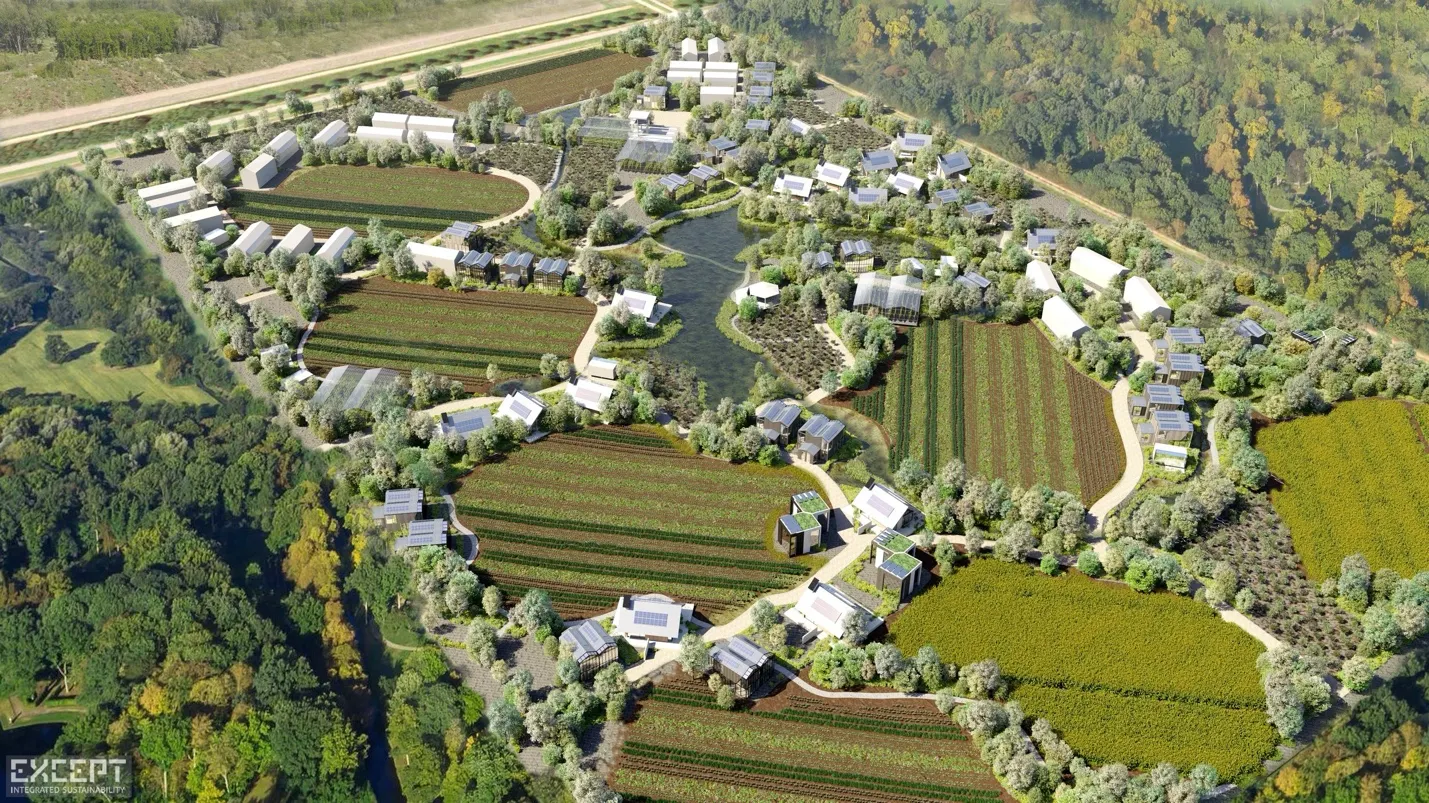
Image: Regen Villages Oosterwold, a sustainable community.
Creative Commons. Click on the image to enlarge.
By the same author:
OIL—What You Need to Know and Understand
Natural Landscapes to Cityscapes
ABOUT THE AUTHOR
Clifton Ware, D.M., emeritus professor (voice), professional singer and author of four published books and two unpublished works, retired in 2007 from the University of Minnesota-Twin Cities School of Music, where he taught for 37 years. In retirement – as a self-described socio-ecological philosopher focused on sustainability issues – he continues seeking an evidence-based, big-picture understanding of socio-ecological systems, including the symbiotic interconnections and role of humans as an integral part of Nature. In 2013 he founded Citizens for Sustainability in St. Anthony Village, MN, produced Sustainability News + Views (2014-2019), a weekly newsletter featuring a variety of articles and a commentary, co-composed 13 Eco Songs with his wife, Bettye, organized Sustainability Forums, and performed eco-oriented programs and presentations for several organizations.
|
|Back to Title|
LINK TO THE CURRENT ISSUE
LINK TO THE HOME PAGE