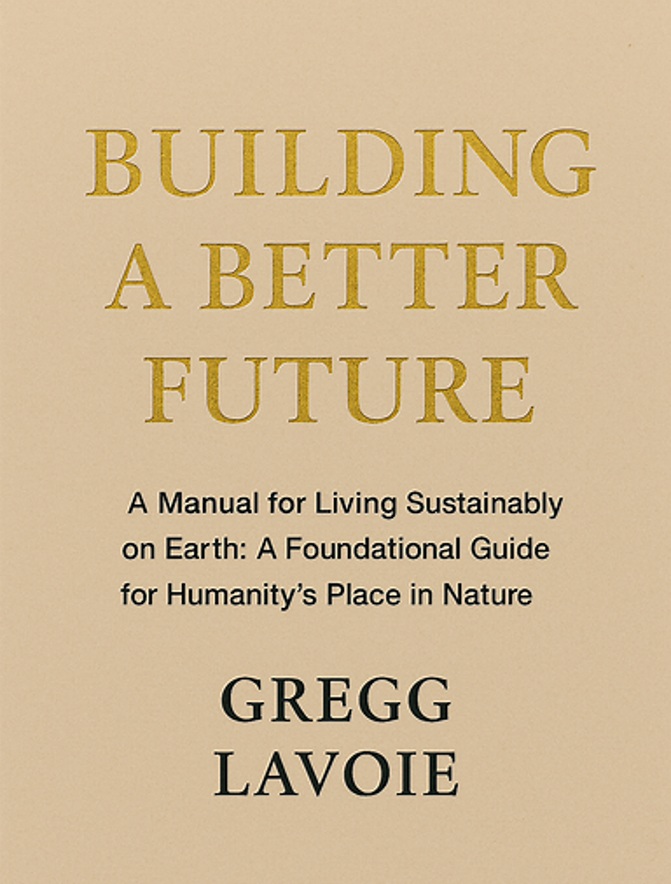
In a previous discussion, we explored why complex problems require complex solutions. The next question is even more difficult:
how do we implement those solutions in the real world?
Humanity has entered a period in history in which the consequences of its actions are becoming increasingly visible. Scientific measurement, lived experience, and historical observation now converge on a common conclusion: the systems that sustain modern civilization are under growing strain. Climate instability, ecological degradation, resource depletion, and social fragmentation are no longer abstract concerns. They are observable conditions affecting economies, communities, and ecosystems across the planet.
Knowledge of these challenges is expanding rapidly. Reports are written, conferences are held, and public awareness continues to grow. Yet meaningful change often lags behind recognition of the problem. Policies move slowly, institutions hesitate, and individuals struggle to alter established patterns of behavior.
This gap between understanding and action has become one of the defining characteristics of our time.
The central question confronting humanity is therefore not simply what is happening. The deeper question is how to respond effectively within systems that are large, interconnected, and heavily dependent on continuity. Without a credible answer to the “how” question, even the most accurate knowledge remains difficult to translate into coordinated progress.
The Most Intimidating Obstacle: The Momentum of the Existing System
Modern civilization is supported by systems that have developed over generations. Transportation networks, energy infrastructure, financial institutions, agricultural systems, and supply chains form the backbone of daily life. These systems provide employment, stability, and identity for billions of people.
Because so many individuals depend on these structures, change carries risk.
Adjusting large systems requires more than good intentions. It involves altering the mechanisms that provide food, shelter, and economic security. When change threatens immediate stability, resistance is a predictable response. People protect what sustains them, even when they recognize long-term dangers.
This resistance is not a failure of intelligence. It is a natural response to uncertainty.
The greatest barrier to change is therefore not ignorance alone. It is the accumulated momentum of systems designed to preserve continuity. That momentum can slow adaptation even when evidence clearly indicates the need for adjustment.
Multiple Obstacles, Not Just One
While system momentum represents the most intimidating challenge, it operates alongside several additional forces that complicate the path forward. These forces interact with one another, reinforcing stability even when transformation is necessary.
Among the most significant are the following:
- Population dependency, in which billions rely on existing systems for daily survival
- Cultural conditioning, where long-standing habits shape expectations about growth and consumption
- System complexity, making unintended consequences difficult to predict
- Institutional resistance, as organizations seek to maintain authority and stability
- Limited time, as environmental and economic pressures accelerate faster than reform
Recognizing these obstacles is essential for realistic planning. Simplifying the problem may provide temporary comfort, but it rarely produces durable solutions. Sustainable progress requires acknowledging the full range of pressures shaping human behavior and institutional decision-making.
Understanding the Limits of Knowledge and Belief
Public discussion often assumes that humanity collectively understands the risks it faces. In reality, knowledge is unevenly distributed across populations, and responses to information vary widely.
Only a relatively small percentage of people currently possess a deep, systems-level understanding of long-term ecological and societal risks. Many individuals remain unaware of the evidence. Others encounter information but question its accuracy. Still others recognize the problem yet feel constrained by financial, cultural, or professional obligations.
Human behavior rarely moves directly from knowledge to action. Instead, individuals tend to occupy one of several distinct response states:
- People who do not know
- People who know but do not believe
- People who believe but cannot act on that belief
- People who believe but choose to act against their own understanding
The final category deserves particular attention. In some cases, individuals or institutions deliberately misrepresent facts, conceal risks, or promote misleading narratives in order to protect power, profit, or influence. History provides many examples of such conduct, from the suppression of scientific evidence to the manipulation of public opinion for economic advantage.
Recognizing the existence of dishonest behavior is not an expression of pessimism. It is a requirement of responsible governance. Systems designed to protect society must anticipate the presence of actors who exploit information for personal gain and must establish safeguards that limit their ability to deceive or cause harm.
At the same time, most people are not malicious. Many struggle to navigate complex systems that reward short-term success while postponing long-term consequences. Understanding this diversity of response helps explain why awareness alone rarely produces unified action.
The Mathematical Reality Behind the Problem
Human impact on the planet is not driven by a single factor. It results from the interaction of multiple variables operating simultaneously. This relationship can be expressed through a simple but powerful equation:
Impact = Population × Consumption × Technology
Each variable influences the others. Population determines how many people require resources. Consumption determines how much each person uses. Technology determines the scale and efficiency with which resources are extracted and transformed.
When one variable increases, overall impact rises. When all three increase together, the effect multiplies rather than adds.
This relationship explains why partial solutions often fall short. Improvements in efficiency may be offset by population growth. Reductions in consumption in one region may be balanced by increased demand elsewhere. Technological innovation can lower costs while simultaneously expanding total production.
The system behaves as an integrated whole.
Recognizing this mathematical reality shifts the conversation from ideology to measurable limits. It highlights the importance of coordinated action across multiple variables rather than reliance on isolated solutions.
Why Current Approaches Often Fall Short
Efforts to address global challenges frequently focus on individual components of the system rather than the system itself. These initiatives can produce valuable progress, yet they rarely resolve the underlying problem.
Common approaches include:
- Public advocacy that raises awareness but may provoke resistance when livelihoods appear threatened
- Technological innovation that improves efficiency but can increase total consumption
- Policy reform that generates incremental progress but struggles against global economic incentives
Each approach has merit. None should be dismissed.
However, lasting change requires alignment between human systems and the physical realities that sustain life. Without that alignment, improvements remain temporary and fragile.
The Strategic Reality: Change Will Be Difficult
An honest assessment of the future must acknowledge a difficult truth: meaningful change will not occur easily.
Modern civilization has invested enormous resources in infrastructure and economic systems designed around continuous expansion. These systems provide opportunity and stability, but they also create dependence. Sudden disruption can produce unemployment, social unrest, and political instability.
ABOUT THE AUTHOR
Gregg Lavoie writes from a lifelong commitment to understanding humanity’s place within the larger systems of Nature. Shaped by hands-on problem solving and a deep respect for the natural world, his work focuses on resilience, stewardship, and the responsibilities we hold toward future generations. Through Human Foundations Publishing, he seeks to offer clear, foundational guidance for living sustainably on Earth and for building a future grounded in truth, integrity, and ecological balance.
|
|Back to Title|
LINK TO THE CURRENT ISSUE
LINK TO THE HOME PAGE